Toiletry Bag Bulk: Dopp, Hanging and Wet-Dry Styles
Ordering toiletry bags in bulk is not the same as ordering cosmetic bags. The two categories overlap in materials and in the factory floor they run on, but the function is different. A cosmetic bag holds products on a vanity. A toiletry bag travels, gets wet, hangs from a hook, and passes through a security line. That changes the opening, the lining and the hardware.
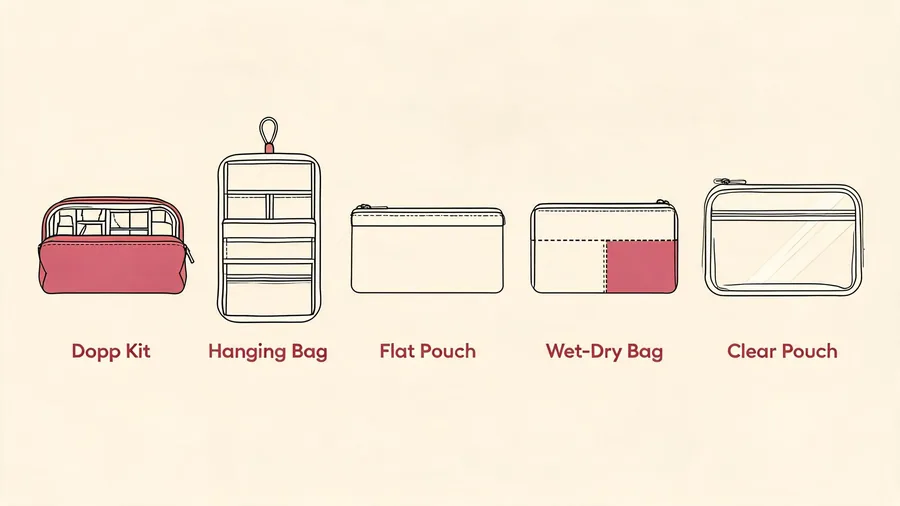
Five styles cover almost every bulk program: the dopp kit, the hanging toiletry bag, the flat zip pouch, the wet-dry split bag and the clear travel pouch. Pick the style first. Everything else, the lining, the zipper, the hook, follows from that choice.
The Five Toiletry Bag Styles Buyers Actually Order in Bulk
Say a hotel group needs a few thousand amenity kits for a refurbishment. Or imagine a subscription box brand building a travel-themed insert. The brief sounds similar. The bag that ships is not.
Dopp kit
A dopp kit is a boxy bag with a top or side opening, usually a single main compartment plus one or two small pockets. It sits flat on a counter and opens wide enough to see the contents. This is the workhorse for retail travel sets and for men's grooming gift programs. It needs a wipe-clean liner because toothpaste and aftershave will leak onto it eventually.
Hanging toiletry bag
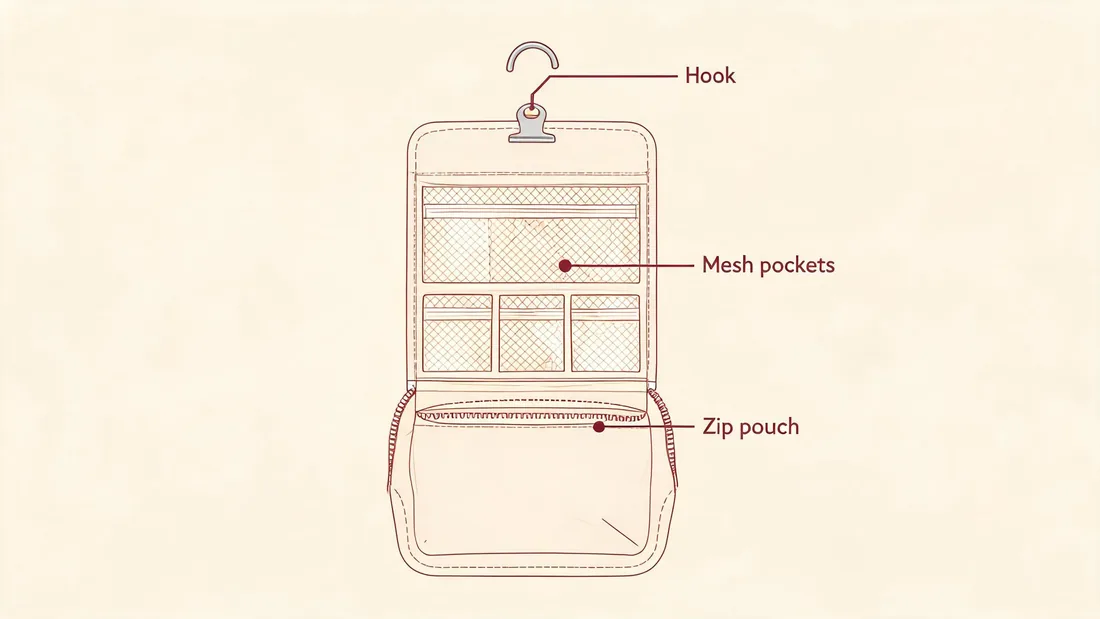
A hanging bag opens like a book or a roll and folds to a compact shape with a hook at the top. It is designed to be hung on a bathroom door, a towel rail or a hook beside a mirror. The load sits at one attachment point, which is a construction problem, not a styling choice. Hotels and travel retailers order this style because it keeps the guest's items off a wet counter.
Flat zip pouch
A flat zip pouch is a single panel with a zipper across the top. No gusset, no depth, no internal structure. It is cheap to make and cheap to pack. Buyers use it for samples, for a secondary pouch inside a larger kit, or for a low-cost giveaway. It is not a dopp kit. Same footprint on a table, completely different purchase.
Wet-dry split bag
A wet-dry bag has two compartments separated by a barrier. One side takes dry items. The other side takes a wet toothbrush, a damp washcloth or a bottle that has leaked. The barrier can be a welded seam, a coated panel, or a removable waterproof insert. Which one you choose depends on how much liquid exposure the program expects.
Clear travel pouch
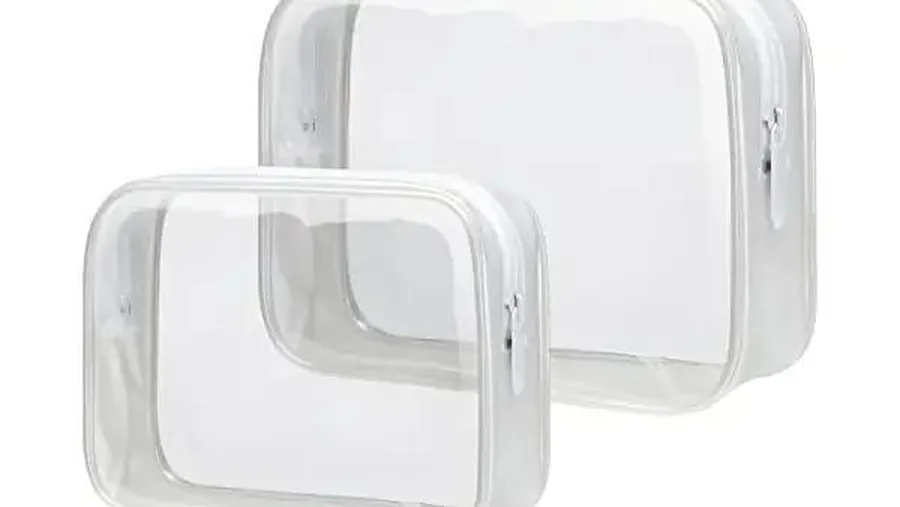
A clear pouch is a single transparent compartment, often with a zip top. It exists for visibility. Security lines, sample kits, and any program where the contents need to be identified without opening the bag. It is the wrong choice for a gift program where privacy matters.
Here is how the five compare on the three decisions that drive cost and function.
| Style | Opening | Lining need | Best program |
|---|---|---|---|
| Dopp kit | Top or side zip, wide | Wipe-clean coated liner | Retail travel sets, grooming gifts |
| Hanging bag | Book or roll fold | Wipe-clean plus reinforced hook patch | Hotels, travel retail, long-stay kits |
| Flat zip pouch | Single top zip | Minimal, often unlined | Samples, giveaways, secondary pouch |
| Wet-dry split | Two zips or one zip plus insert | Sealed or removable waterproof insert | Swim, gym, travel with damp items |
| Clear pouch | Top zip | None, wipe-clean film face | Security-line kits, sample programs |
Linings That Wipe Clean: Coated Fabric, Film and Removable Inserts
Cleanability comes down to surface smoothness, seam construction, corner geometry and how the material reacts to the residue it will meet. A wipe-clean liner is a smooth coated or film-based inner surface that can be cleaned with limited moisture. That is the definition. It does not mean the bag is waterproof.
Two words get misused in specs: leak-resistant and leakproof. Leak-resistant construction delays liquid escape. It is not guaranteed to stay liquid-tight under pressure or prolonged exposure. Leakproof construction is designed and tested to prevent liquid passage under stated test conditions. If a spec says leakproof but the construction is stitched, the wording is wrong and the buyer will find out at the worst time. Write leak-resistant unless the seams are welded or sealed and the test conditions are agreed.
Stitched seams are the default. They are strong, repairable and cheap. They also wick. A welded or sealed seam closes the stitch holes and gives better containment, at a higher unit cost and a narrower material window. When full seam sealing is unnecessary, a removable waterproof insert does the job. The insert is a detachable inner container that isolates spills and simplifies cleaning. The outer bag stays stitched and cheap. The insert takes the abuse.
A drainage eyelet belongs in a wet-use compartment, not in a dry one. It is a reinforced opening that lets water escape from a washable or wet-use section. Put it at the lowest point of the wet compartment when the bag is hung. Skip it on the dry side, or the dry side becomes a wet side.
Zippers, Hooks and Hardware: The Parts That Fail First
Hardware fails before fabric does. A hanging hook carries the complete load of a packed bag at one attachment point. That is why it needs a reinforcement patch, an additional material layer placed at the high-stress attachment. Without it, the fabric around the hook stretches, then tears. The patch is cheap. The return is expensive.
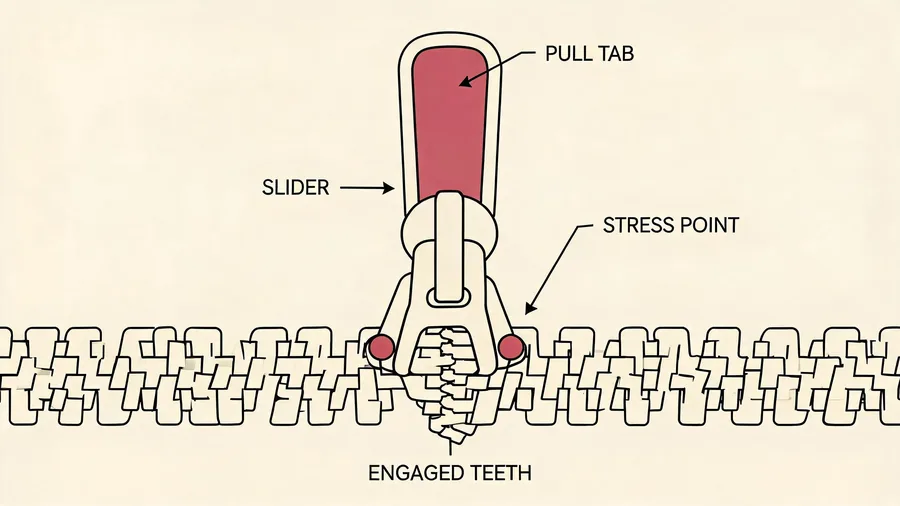
Zipper choice tracks the program. Bulk gifting usually wants a smooth, quiet zipper that feels good in the hand and survives a few trips. Daily travel use wants a zipper that tolerates grit, repeated opening and a stuffed bag. Those are different specifications, and the price difference is real. Tell the factory which one you are buying.
Mesh pockets and clear film pockets do different jobs. Mesh is an open structure used for ventilation, visibility, stretch pockets or lightweight organization. It drains and it breathes. It also offers limited liquid containment. Clear film pockets improve content identification and wipe-clean performance. They hold a spill better than mesh but they trap moisture. A wet toothbrush in a clear pocket stays wet.
Elastic loops separate cylindrical containers, brushes and small tools. They stop the contents from rolling and they keep a bottle upright. Brush guards and protective flaps reduce contamination and stop bristles from touching other contents. Both are small additions that a buyer notices on the second use, not the first.
Compartment Layouts by Program: Hotels, Travel Retail, Subscription Boxes, Gifting
Compartment count should follow the program brief. A hotel amenity bag holds a fixed set of items and does not need internal pockets. A travel-retail set holds a curated assortment and usually needs one or two loops plus a mesh pocket. A subscription-box insert holds a surprise mix, so a wide opening matters more than compartment count. A corporate gift holds a logo and a small set of items, and the bag is often kept after the contents are gone.
A wide opening improves visibility and reduces the need to remove every item. That sounds minor. It is the difference between a bag a guest uses and a bag a guest leaves in the drawer.
Style should follow the program, not the trend board. A clear pouch is right for a security-line kit and wrong for a gifting program. A hanging bag is right for hotels and overbuilt for a sample giveaway. When the bag carries a logo rather than a retail barcode, the priorities shift: brand placement, material feel and packaging matter more, while internal organization matters less. For retail SKUs, the reverse is true.
Fabrics and Coatings for Toiletry Bags: Nylon, Polyester, Canvas, Clear Film
Polyester fabric is dimensionally stable, widely printable, and available in many weights, weaves, coatings and recycled-content options. Nylon fabric offers high strength-to-weight performance and good abrasion resistance, though coating and weave strongly affect water resistance. Canvas is a durable plain-woven fabric, commonly cotton or a fiber blend, selected for structure, texture and abrasion performance. It cleans less easily than a coated synthetic, and that trade-off should be in the brief.
Coatings and films do the actual work on a toiletry bag. Polyurethane coating improves water resistance, hand feel and durability. Polyvinyl chloride coating is used where stiffness, surface protection or strong moisture resistance is required. Thermoplastic polyurethane film is a flexible film used for waterproof laminates, transparent components and welded constructions. Polyethylene vinyl acetate film is often selected for cleanable liners and moisture-resistant inner surfaces. Biaxially oriented polyester film is dimensionally stable and used in reflective laminates and barrier constructions.
Denier and GSM are specification terms, not performance guarantees. Denier is a yarn linear-density unit used to describe synthetic bag fabrics, and it does not directly state finished-fabric strength. GSM is grams per square meter, used to specify fabric, film, nonwoven and composite mass per area. A 600D fabric from one mill and a 600D fabric from another can behave differently. Ask for the finished-fabric spec, not just the yarn number.
For a broader look at how these materials run across other bag programs, see the bulk cosmetic bags buying guide. If the program is a clear pouch rather than a toiletry kit, the clear cosmetic bags guide covers that ground. And for the small organizer inserts that often ship alongside a toiletry bag, the toiletry cubes and travel organizers article is the right starting point.
Writing the Spec: Tech Pack, BOM and Tolerance for a Toiletry Bag Order
A tech pack is the controlled product specification. It contains dimensions, materials, construction details, artwork, labels, packaging and test requirements. A bill of materials is the structured list of every material, component, quantity, color and supplier reference needed for one product. Together they are what a factory quotes from. A brief without them gets a guess.
Critical dimensions are the measurements that directly affect fit, function, component compatibility or safety. On a toiletry bag, the zipper length, the gusset depth and the hook placement are critical. Tolerance is the permitted variation from a specified nominal value. If the insert is cut to the same size as the compartment with no tolerance, it will not fit after production. State the tolerance.
Color approval runs in three steps. A color standard is the approved physical or digital reference. A lab dip is a small dyed material sample submitted for approval before bulk production. A strike-off is a printed sample used to approve artwork, color, scale, registration and print quality. Approve from the physical standard, never from a screen.
AQL, the acceptance quality limit, is used with a sampling plan to determine inspection sample size and acceptance numbers. Defect classification assigns critical, major or minor severity based on risk and product impact. These are the acceptance language for a bulk order. Agree on them before production, not after.
Common Bulk Toiletry Bag Mistakes and How to Avoid Them
- Specifying leakproof on a stitched construction. Write leak-resistant, or move to welded seams.
- Skipping the reinforcement patch on a hanging hook. The load sits at one point. Reinforce it.
- Choosing a clear pouch for a gift program where privacy matters. Clear is for security lines and samples.
- Approving color from a screen. Screens render color differently on every device in the chain. Use a physical standard.
- Leaving compartment count to the supplier. It should come from the program brief.
Here is a checklist to copy into your next brief.
- Style chosen and named (dopp, hanging, flat pouch, wet-dry, clear)
- Opening type and zipper length specified
- Lining type: coated, film, removable insert or none
- Seam construction: stitched, welded or sealed
- Hook placement and reinforcement called out
- Wet compartment and drainage eyelet located
- Critical dimensions with tolerance
- Color standard, lab dip and strike-off approvals
- AQL and defect classification agreed
- Packaging format selected
If the program is a makeup bag rather than a toiletry kit, the bulk makeup bags page covers the cosmetic side of the same factory floor. When the spec is ready, send it through the contact page and the team can quote against the actual construction rather than a style name.
Frequently Asked Questions
What is the difference between a dopp kit and a hanging toiletry bag in a bulk order?
A dopp kit sits on a counter and opens wide from the top or side. A hanging bag folds around a hook and is designed to hang on a bathroom door or rail. The hanging bag carries its full load at one attachment point, so it needs a reinforcement patch at the hook. The dopp kit does not. They also differ in lining needs: the dopp kit mainly needs a wipe-clean liner, while the hanging bag needs a wipe-clean liner plus reinforced hardware.
Which toiletry bag style suits corporate gifting best?
A dopp kit or a flat zip pouch usually works best for gifting. Both take a logo cleanly and both feel substantial in the hand. A clear pouch is a poor gift choice because the contents are visible, which most recipients do not want. A hanging bag works for travel-themed gifts but costs more because of the hook and fold construction. Match the style to who receives it, not to what is trending.
How do you keep wet items separate from dry ones in a toiletry bag?
Three options, and they are not equal. A welded or sealed seam gives the best containment but costs more and narrows the material choice. A removable waterproof insert isolates spills and is easy to clean, which suits programs where the outer bag stays stitched. A drainage eyelet lets water escape from a wet-use compartment and belongs at the lowest point when the bag is hung. Pick based on how much liquid exposure the program expects.
What should a tech pack for a bulk toiletry bag include?
A tech pack is the controlled product specification. For a toiletry bag it should contain the style and opening type, zipper length, lining specification, seam construction, hook placement and reinforcement, critical dimensions with tolerance, color standard, artwork, labels, packaging and test requirements. A bill of materials lists every material, component, quantity, color and supplier reference. Without both documents, the factory is quoting from a guess.