Glitter Cosmetic Bags for Retail-Ready Lines
Sparkle that survives a stocking stuffer season. Glitter films, metallic PU and shimmer quilting, matched to your brand palette.
Finishes that photograph well
Glitter cosmetic bags sell on camera. We build them on PVC and TPU film bases and on metallic PU, using the same waterproof constructions as the rest of our range, and match colors to your Pantone reference at Delta E 2.0 or better.
Because glitter finishes vary batch to batch, every program starts with a paid sample in 1-10 days so you sign off the exact sparkle density and base color before production. Custom production runs 7-15 days after approval.
MOQ is 500 pieces per style. Packaging options include color boxes, gift boxes with handle bags and branded poly mailers, so the bag can go straight into a retail set.
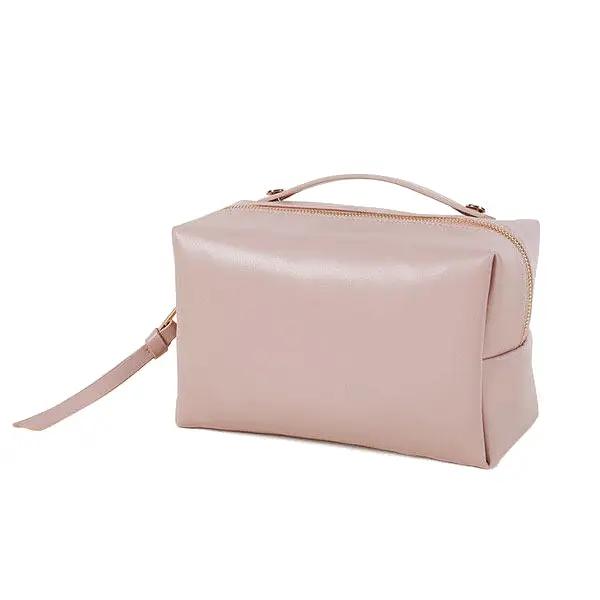
Styles from our catalog
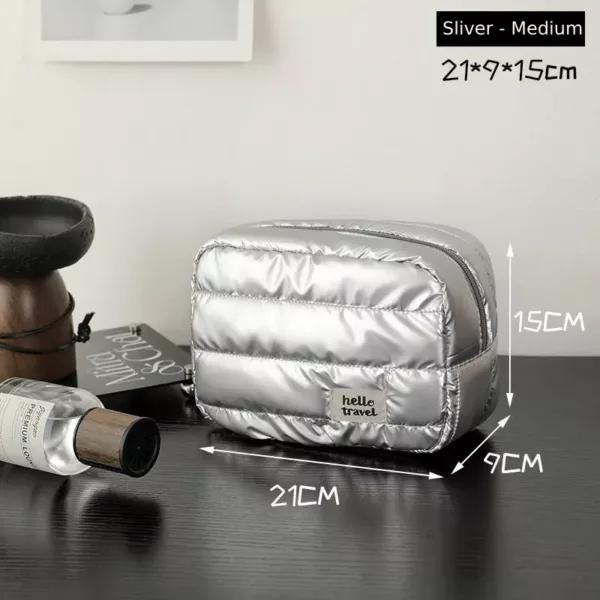
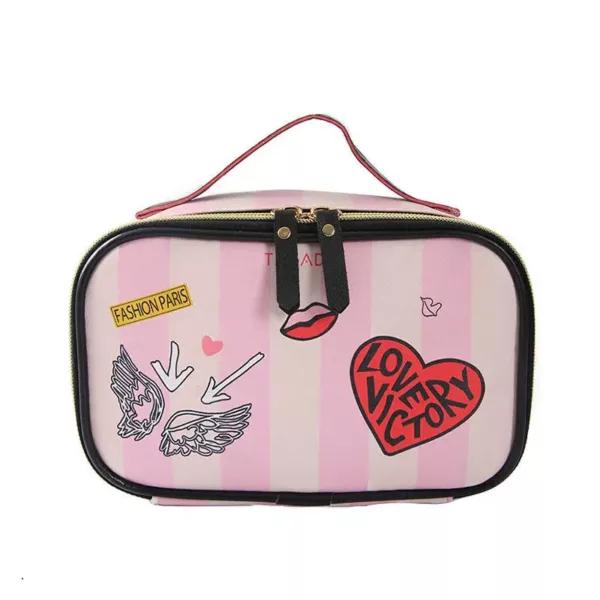
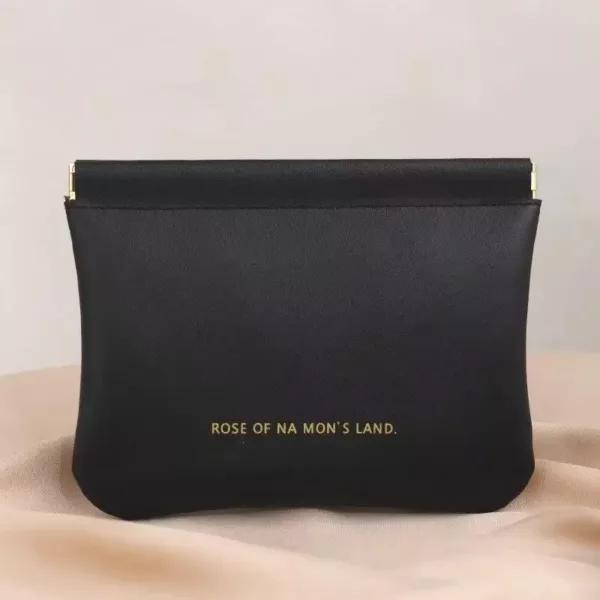
Glitter finishes are produced to order. The catalog styles above show our closest metallic and shimmer constructions.
Buying questions, answered
Do you stock glitter styles?
Glitter programs are made to order so the finish matches your brand palette exactly. The metallic and shimmer styles above are the closest catalog references.
Can you match our brand color in glitter film?
Yes. We match to Pantone references at Delta E 2.0 or better and confirm the finish on a physical sample before production.
What quantities do glitter programs start at?
MOQ is 500 pieces. Expedited production is available at a surcharge: 20 percent extra cost cuts the timeline by 30 percent, up to 40 percent extra for a 70 percent cut.
Ready to sample your cosmetic bag line?
Send your brief and reference photos. Paid samples in 1-10 days, revisions in 2-3 days.
Glitter Cosmetic Bag Materials and Construction
A glitter cosmetic bag is not one material decision. It is a stack of choices that decide whether the bag sheds, scratches, leaks, or holds up under daily use. The sparkle comes from a surface layer. The structure comes from the base fabric. The cleanability and leak resistance come from the liner and the seams. Buyers who treat all glitter as one thing end up with a bag that looks right in photos and fails in a purse.
Most glitter bags start with a base fabric. Polyester is common because it is dimensionally stable and prints well. Nylon gives better abrasion resistance for the same weight. Canvas adds structure and a more premium hand feel but makes the bag heavier and less flexible. The glitter layer then goes on top. Some suppliers use a glitter-coated film. Others embed glitter in a clear TPU film. A third option is a printed glitter effect that has no raised texture at all. Each behaves differently under wear.
The table below compares the realistic material pairings for this category. It is not a ranking. A buyer packing a promotional gift has different needs than a buyer stocking a premium travel line.
| Base + glitter system | What it is good for | Where it fails |
|---|---|---|
| Polyester with glitter print | Low cost, fast production, no shedding risk, easy to print logos | Looks flat, no tactile sparkle, print can wear off at fold lines |
| Polyester with glitter-coated film | Strong visual sparkle, good color control, moderate cost | Coating can crack at folds, may feel stiff, glitter can flake under abrasion |
| Nylon with embedded glitter TPU film | Durable, flexible, glitter is sealed inside the film so no shedding, wipe-clean surface | Higher cost, fewer color options, film adds weight |
| Canvas with glitter print or coating | Structured, premium look, good for larger bags | Heavier, coating adhesion is harder on textured canvas, stiff at corners |
| Mesh with glitter yarn or print | Lightweight, breathable, good for see-through organization | Limited liquid containment, glitter yarn can snag, print fades fast |
Liner choice matters more than many buyers expect. A smooth coated liner wipes clean. A welded seam contains spills. A stitched bag with a removable insert is easier to clean but costs more. For a sparkly makeup bag, the liner is often the difference between a bag that survives a leaking foundation bottle and one that stains permanently. See our makeup bag materials guide for a fuller breakdown of liner and coating options.
How to Specify a Glitter Makeup Bag for Your Buyer Situation
Say you are sourcing for a beauty subscription box. The bag is a freebie or a low-cost add-on. Your priority is price per unit and visual impact in an unboxing video. Specify a polyester base with a glitter print. It is cheap, prints well with brand colors, and does not shed glitter into the box. Accept a flat sparkle. Do not pay for embedded TPU film. You will not get the return. Request a sample under studio lighting, not just a photo, because glitter prints look different on camera than in hand.
Now say you are a makeup artist selling a branded travel kit. Your buyers will throw the bag in a suitcase, drop it on tile, and wipe it down between clients. Specify a nylon base with an embedded glitter TPU film. The glitter is sealed inside the film, so it cannot flake off onto brushes or clothes. The surface wipes clean. Ask for welded seams if the kit includes liquids. This costs more and adds lead time, but it is the difference between a professional tool and a novelty item. If the budget cannot stretch to TPU, a polyester base with a glitter coating and a removable wipe-clean insert is a workable middle ground.
A third situation is a boutique brand selling a premium makeup bag at retail. The bag is the product, not a container for one. Your buyer notices weight, hand feel, and how the zipper pulls. Specify canvas with a glitter print or coating, but test the coating adhesion on the canvas texture. Canvas is a durable plain-woven fabric, but a stiff coating on a textured face can crack at the corners. Request a fold test. Bend the sample bag at the side seams repeatedly. If the coating cracks, switch to a printed glitter effect or move to a nylon base. The premium feel comes from the structure and the hardware, not from how much glitter you pile on.
For buyers who need volume fast, our bulk makeup bag page covers stock and low-MOQ options. For a different visual style, compare mesh cosmetic bags or clear PVC makeup bags.
Customization That Changes Tooling, Cost, or Lead Time
Not every request is equal. Some changes cost nothing. Some require new tooling and add weeks. Knowing which is which helps you decide where to push and where to hold.
Printing a logo on an existing glitter fabric does not change tooling. It changes setup time and may affect cost per unit, but the base material and the pattern stay the same. Changing the glitter color within an existing film range is usually a color matching task, not a tooling task. The supplier adjusts the pigment. The lead time impact is small, often just the added sampling round. Adding a hang tag or switching the zipper pull is a hardware change. It may cost a little more per unit, but it does not require new molds or dies.
What does change tooling? A custom glitter density or a new base film formulation. If you want a specific sparkle size, a particular shimmer angle, or a film that passes a specific abrasion test, the supplier may need to compound a new film. That is tooling in the sense of a new material spec, and it adds real lead time. A custom shape, like a curved bottom or a molded base, requires new cutting dies or molds. A custom zipper with a branded puller needs a new mold for the puller. These are the requests that push a 15-day production run to 25 or 30 days. Ask early. Do not surprise the factory at the sample approval stage.
One honest point. Glitter bags are not usually the place for heavy structural customization. The material is the feature. If you want a fully custom shape and a custom glitter film and a custom liner and a custom zipper, you are building a new product, not customizing an existing one. That is fine, but price it as development work, not as a variation on a stock bag.
What to Check Before Approving Production
The sample in your hand is not the production run. Between the sample and the shipment, a lot can drift. Here is what to check before you sign off.
First, rub the glitter surface. Not gently. Rub it the way a customer will when the bag sits in a purse against keys and a phone. If glitter flakes off onto your hand, the coating or the film is failing. Ask the supplier what abrasion test they use and what the pass standard is. If they cannot name a test, that is a warning. The reference for this category is straightforward. A glitter film should hold its surface under repeated rubbing. A glitter print should not transfer color or particles to a white cloth. Test this yourself with a dry white cloth and then a damp one.
Second, check the seams. A sparkly makeup bag often has a stitched construction. Stitched seams are fine for dry contents. They are not leakproof. If the bag will carry liquids, the seams need to be welded or the bag needs a removable insert. Do not let a sales description say "leakproof" when the construction is stitched. Leak-resistant is a different claim. Leakproof means the bag was tested and held liquid under stated conditions. Ask what those conditions were. If the answer is vague, write your own check. Fill the sample with water, zip it, turn it upside down, and wait. That test costs nothing and tells you more than a certificate.
Third, check the color. Glitter changes under different light. A bag that looks silver in a factory photo may look blue under retail lighting. Approve a physical sample under the lighting your customer will actually use. If you sell online, photograph the sample under your studio setup before approving. Colorfastness matters too. Rub a damp white cloth on the glitter surface. If color transfers, the bag will stain clothes or other bags in transit. The specification should state the colorfastness requirement and the test method. Do not accept "good colorfastness" as a spec. Ask for the number.
Fourth, check the zipper and the opening. A wide opening improves visibility and reduces the need to remove every item. That is a design choice, not a default. If your bag is narrow at the top, the glitter is doing all the work and the function is suffering. Open the sample fully. Can you see the bottom? Can you reach the corners? For a makeup bag, this matters. Buyers return bags they cannot use, no matter how pretty they are. Our custom cosmetic pouch page covers opening and organization options in more detail.
Finally, check the hanging hook if your design includes one. A hanging hook carries the complete load at one attachment point. It needs a reinforcement patch behind the fabric. Without it, the hook will tear out under the weight of full bottles. Pull on the hook. Hard. If the fabric deforms or the stitching shows stress, the reinforcement is inadequate. This is a common failure point on glitter bags because the base fabric is often thin to keep costs down.
Approving production is not a formality. It is the last chance to catch a material that sheds, a seam that leaks, or a hook that tears. Ten minutes of testing on a sample saves a container load of returns.