Bulk Makeup Bags with Tiered Lead Times
Amazon aggregators, gifting programs and subscription boxes buy here. 150,000 units of monthly capacity, tiered lead times, volume pricing on request.
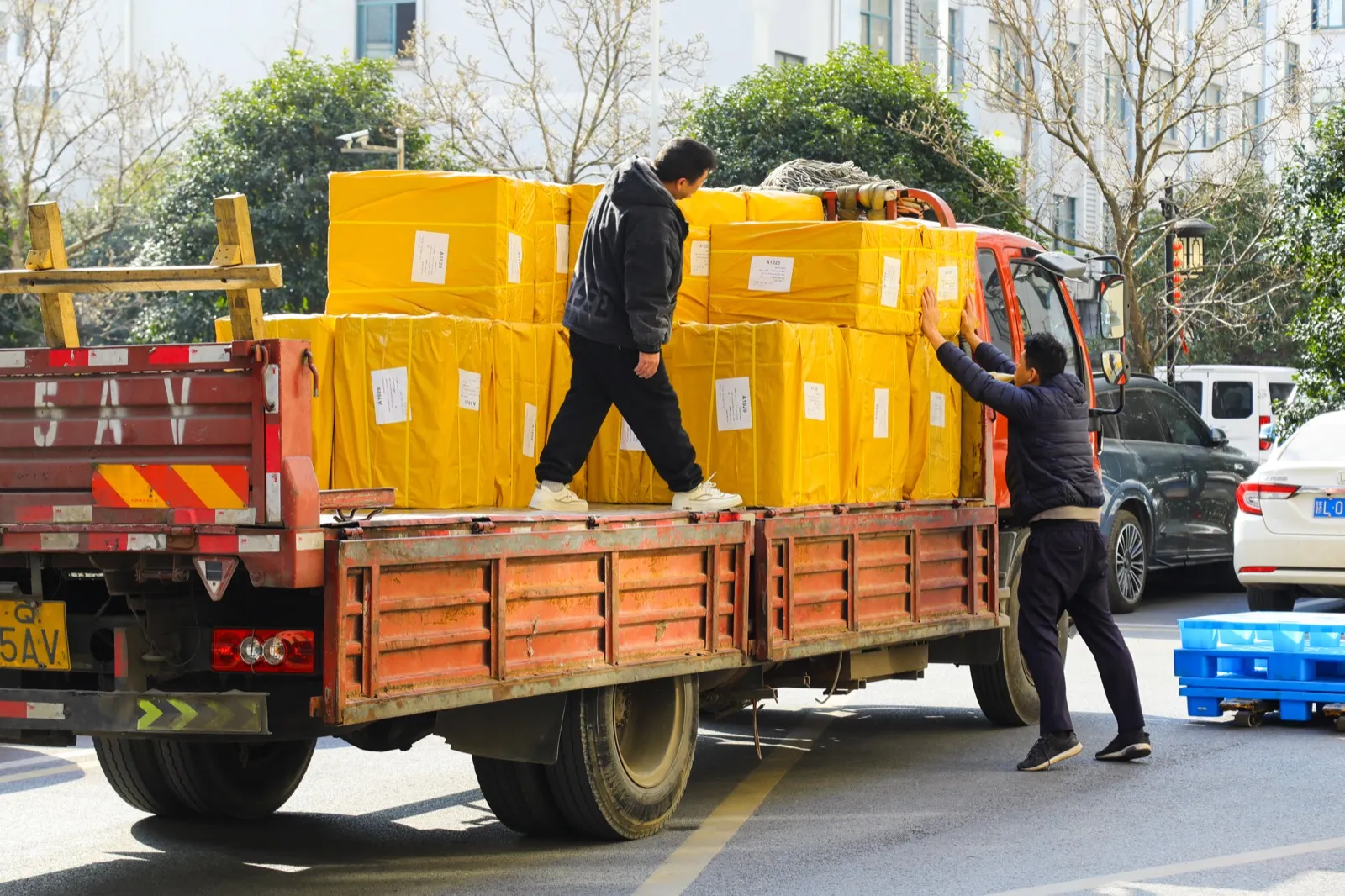
Capacity that absorbs big orders
Bulk buyers need two guarantees: the capacity to hit the date and the discipline to hit it again next quarter. Our factory runs 50+ automated production lines with 150,000 units of monthly output, and every order closes with a 2-3 day inspection before packing.
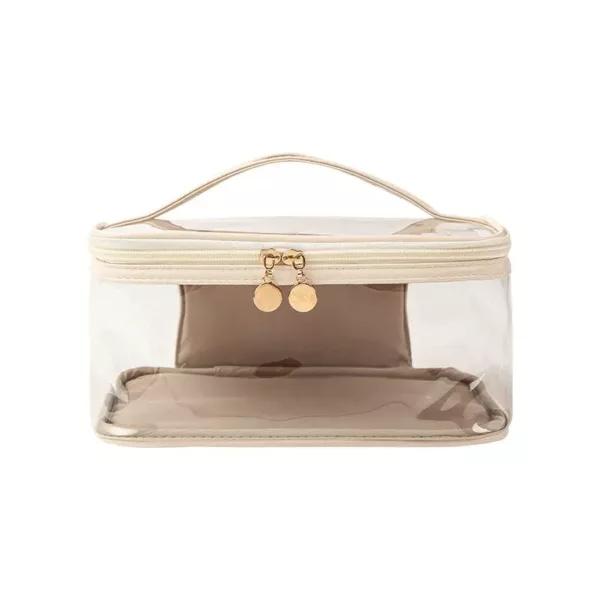
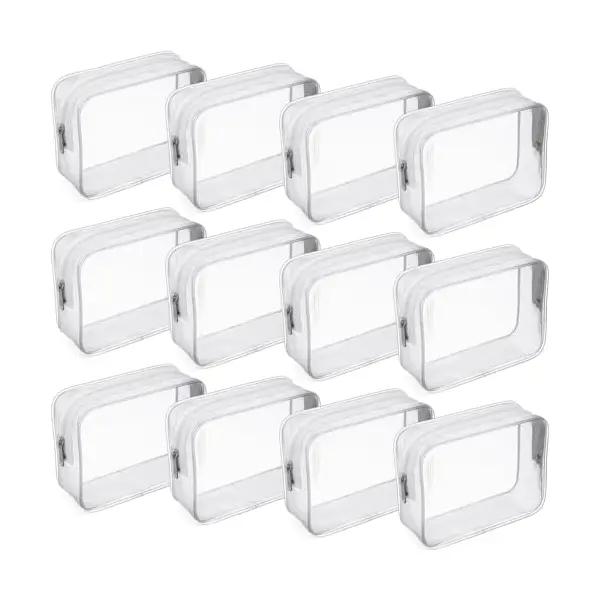
Lead times step with quantity. As an example from the catalog, the MB-3911 clear pouch runs 15 days up to 500 pieces and 25 days up to 5,000 pieces, with larger volumes quoted individually. Sea freight takes 40-45 days; rail and air options are quoted per lane.
When the calendar is tight, expedited production is available: 20 percent extra cost cuts the timeline by 30 percent, 30 percent extra cuts it in half, and 40 percent extra cuts it by 70 percent.
Buying questions, answered
How is bulk pricing quoted?
Per style and quantity tier. Send the style, quantity and target date through the quote form and we respond within 24 hours.
Can you hold stock for repeat programs?
Our warehouses hold 3,000,000+ items and ready-to-ship best sellers leave in 24-48 hours, which makes repeat replenishment programs practical.
What happens if goods arrive damaged?
After-sales support responds within 24 hours with replacements, credits or technical support depending on the case.
Ready to sample your cosmetic bag line?
Send your brief and reference photos. Paid samples in 1-10 days, revisions in 2-3 days.
Materials That Decide Whether a Makeup Bag Survives
Bulk makeup bags look simple until you compare the materials side by side. A buyer ordering 5,000 pieces for a beauty subscription box has different needs than one stocking 500 units for a boutique. One wants a liner that wipes clean after a shampoo leak. The other wants a fabric that photographs well on a shelf. Both are buying the same category, but the material spec changes everything.
The construction choices for cosmetic and toiletry bags come down to shell fabric, inner lining, closure type, and seam treatment. A wipe-clean liner reduces absorption and makes the bag usable after a spill. Welded or sealed seams provide better leak containment than ordinary stitched seams. A stitched bag may still use a removable waterproof insert when full seam sealing is unnecessary. That distinction matters because full seam sealing costs more and changes the production line.
| Material | Good for | Where it fails |
|---|---|---|
| Polyester fabric | Printability, dimensional stability, many weights and recycled options | Lower perceived value for luxury lines; coating choice drives water resistance |
| Nylon fabric | High strength-to-weight, good abrasion resistance, soft hand feel | Cost per yard climbs fast; UV exposure degrades uncoated nylon |
| Canvas | Structure, texture, premium craft look, durable plain weave | Absorbs spills unless lined; heavier shipping weight |
| Clear PVC film | Visibility, wipe-clean pockets, quick content identification | Stiffness, yellowing over time, limited breathability |
| EVA film | Cleanable liners, moisture-resistant inner surfaces, flexible feel | Less abrasion resistance than coated woven fabrics |
| Mesh | Ventilation, visibility, stretch pockets, lightweight organization | Poor liquid containment; snags on sharp tools |
Say a buyer wants cheap makeup bags in bulk for a promotional giveaway. Polyester with a simple stitched construction keeps the unit price low and the lead time short. The same buyer trying to sell a travel set at a higher retail price might switch to nylon with a PU coating and a clear film pocket. The material cost rises, but the product holds a different position. For canvas makeup bag bulk orders, the shell often carries the brand. Cotton canvas takes screen printing well and feels substantial in the hand, but it needs a coated liner to handle a foundation leak.
Elastic loops separate brushes and cylindrical containers. Mesh pockets provide visibility and drainage but offer limited liquid containment. Clear film pockets improve content identification and wipe-clean performance. A removable pouch supports cleaning and allows wet or spill-prone items to be isolated. These are small decisions that change how the bag behaves in daily use. A buyer who skips the liner conversation because the outer fabric looks good will hear about it from customers after the first shampoo bottle opens in transit.
Specifying Bulk Makeup Bags for Different Buyer Situations
The same factory can build three different bulk makeup bags for three different buyers, and all three orders will be correct. What changes is the specification, not the machinery. A buyer who knows their end user can write a spec that avoids overpaying for features nobody needs.
The subscription box buyer
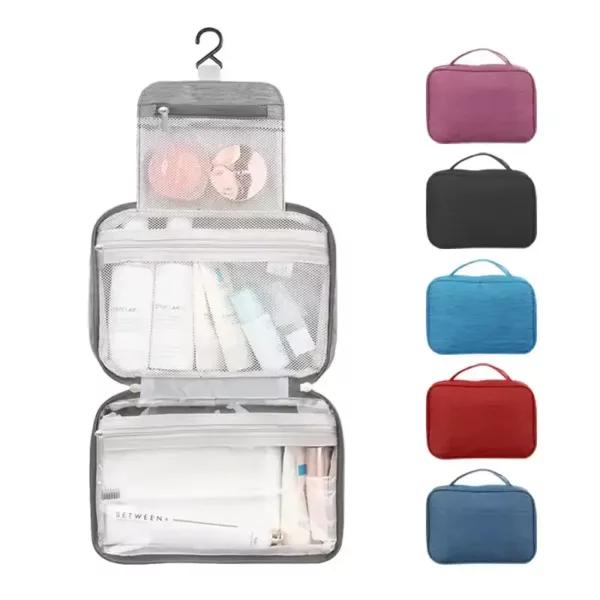
This buyer orders bulk makeup pouches monthly, with a new colorway or print each cycle. They need a low minimum, fast repeat turnaround, and a construction that survives a warehouse pick-and-pack line. Polyester with a wipe-clean EVA liner works well. A simple zipper closure keeps cost down. The buyer should specify a hanging hook only if the pouch is meant to be reused as a travel organizer, because the hook requires reinforcement. The complete load concentrates at one attachment point, and a cheap hook tears out under a full bag of toiletries.
The boutique or gift set buyer
This buyer wants 500 to 1,000 pieces that feel like a gift. Canvas or a textured polyester with a clear film pocket gives the product shelf presence. The clear pocket lets the buyer show off a mini brush set or a travel-size skincare trio without opening the bag. Brush guards and protective flaps reduce contamination and prevent bristles from contacting other contents. This matters when the bag ships with makeup brushes inside. A removable pouch adds cost but gives the end user a way to isolate a damp sponge or a leaking pump bottle.
The private label travel brand
This buyer needs bulk toiletry bags that can be marketed as leak-resistant or easy to clean. That wording carries obligations. Leak-resistant construction delays liquid escape but is not guaranteed to remain liquid-tight under pressure. Leakproof construction is designed and tested to prevent liquid passage under stated test conditions. A buyer who wants to print "leakproof" on the hang tag needs to approve the test method and the pass criteria before production. A stitched bag with a removable waterproof insert is often the practical middle ground. The bag stays simple, the insert handles the spills, and the claim stays honest.
Each buyer situation changes the material, the closure, the liner, and the accessories. The factory can build all of them. The buyer's job is to know which combination matches the retail price and the end user's actual habits. See our materials guide for a deeper breakdown of coating and liner options.
Customization That Changes Cost vs. Customization That Does Not
Not all customization is equal. Some changes cost nothing extra and add no lead time. Others require new tooling, a longer production window, or a higher minimum order. Buyers who understand the difference can negotiate from a stronger position.
Customization that does not change tooling includes print placement on a stock panel, zipper pull color from an existing range, and woven label design. These choices live inside the factory's standard process. A buyer can swap a black zipper for a cream one without slowing anything down. The same goes for choosing a liner color from the factory's in-stock film options. These are specification choices, not engineering changes.
Customization that changes tooling includes a new zipper length, a custom-shaped clear window, a molded hook, or a printed film that requires a new plate. A custom zipper length means the factory must cut new patterns and possibly order a new zipper chain. A printed clear film needs a plate or cylinder, which adds a one-time tooling cost and a longer lead time. A buyer who wants a hanging hook on a bag that was designed without one is asking for a reinforcement patch, extra stitching steps, and possibly a new pattern piece. That is a real change.
Lead time is the other lever. A stock polyester bag with a printed logo can ship in days. A bag with a custom-molded hook or a printed EVA liner takes longer because the component must be produced before assembly begins. The factory's rush options can compress that timeline, but the tooling still has to happen. Buyers who need bulk makeup bags fast should ask which customizations are "stock plus" and which are "new build." The answer changes the quote more than the bag itself.
One honest note on minimums. Some customizations push the MOQ up because the factory has to buy a minimum quantity of a custom component. A custom zipper color might require a 2,000-piece order just to cover the zipper supplier's minimum. A stock zipper color keeps the MOQ at the category's standard level. Ask before you fall in love with a specific shade. Our wholesale makeup pouches page shows which options stay inside the standard MOQ.
What to Check Before Approving Production
Approving a pre-production sample is not the same as approving a production run. The sample shows what the factory can build. The production run shows what the factory builds at volume. Between those two moments, a buyer should check a short list of things that routinely go wrong on bulk makeup bags.
First, check the seams. A bag that looks fine on the sample table may have loose threads or skipped stitches at the zipper ends once the line runs fast. The zipper is the highest-stress point on any makeup bag. Pull it open and closed twenty times on the sample. Then ask the factory to do the same on the first production pieces. A zipper that catches or separates at the ends will generate returns.
Second, check cleanability. The reference states that cleanability depends on surface smoothness, seam construction, corner geometry, and material compatibility with expected residues. A bag with sharp interior corners traps foundation and powder. A bag with a smooth coated liner and rounded corners wipes clean in seconds. If the bag is marketed as easy to clean, the buyer should test it with the actual products their customers use. Water alone does not simulate a spilled liquid foundation.
Third, control the performance claims. If the bag is called leak-resistant, the buyer and factory need to agree on what that means. Leak-resistant construction delays liquid escape but is not guaranteed to remain liquid-tight under pressure. Leakproof construction is designed and tested to prevent liquid passage under stated test conditions. The difference is not semantic. A customer who holds a bag upside down and sees liquid seep through the zipper will not accept "leak-resistant" as an excuse. Write the claim on the spec sheet, define the test, and approve the wording before production.
Fourth, check the hardware and attachment points. A hanging hook requires reinforcement because the complete load is concentrated at one attachment point. Brush guards and protective flaps reduce contamination and prevent bristles from contacting other contents. If the bag includes these features, inspect the stitching around each one. A hook that rips out on first use is worse than no hook at all.
Finally, check the color and print. Pantone matching for a solid color is one thing. A printed pattern across a zippered panel is another. The print must align across the zipper, and the colors must stay consistent from the first piece to the last. A buyer who approves a sample with a slight color shift and then receives 10,000 pieces with the same shift has no one to blame but the approval process. Look at the sample under daylight, not just the factory's showroom lights. For more on what separates a good factory from a mediocre one, see our buyer's comparison.
These checks take an afternoon. They prevent a container of bulk makeup bags from arriving with a problem that was visible on the sample if anyone had looked closely. The factory wants the order to be right. The buyer who checks these points before approving production gives the factory a clear target to hit.