Makeup Pouches Wholesale, Ready When You Are
Stocked best sellers ship in 24-48 hours, mixed styles and colors accepted. Add your logo in 3-7 days.
Wholesale without the waiting
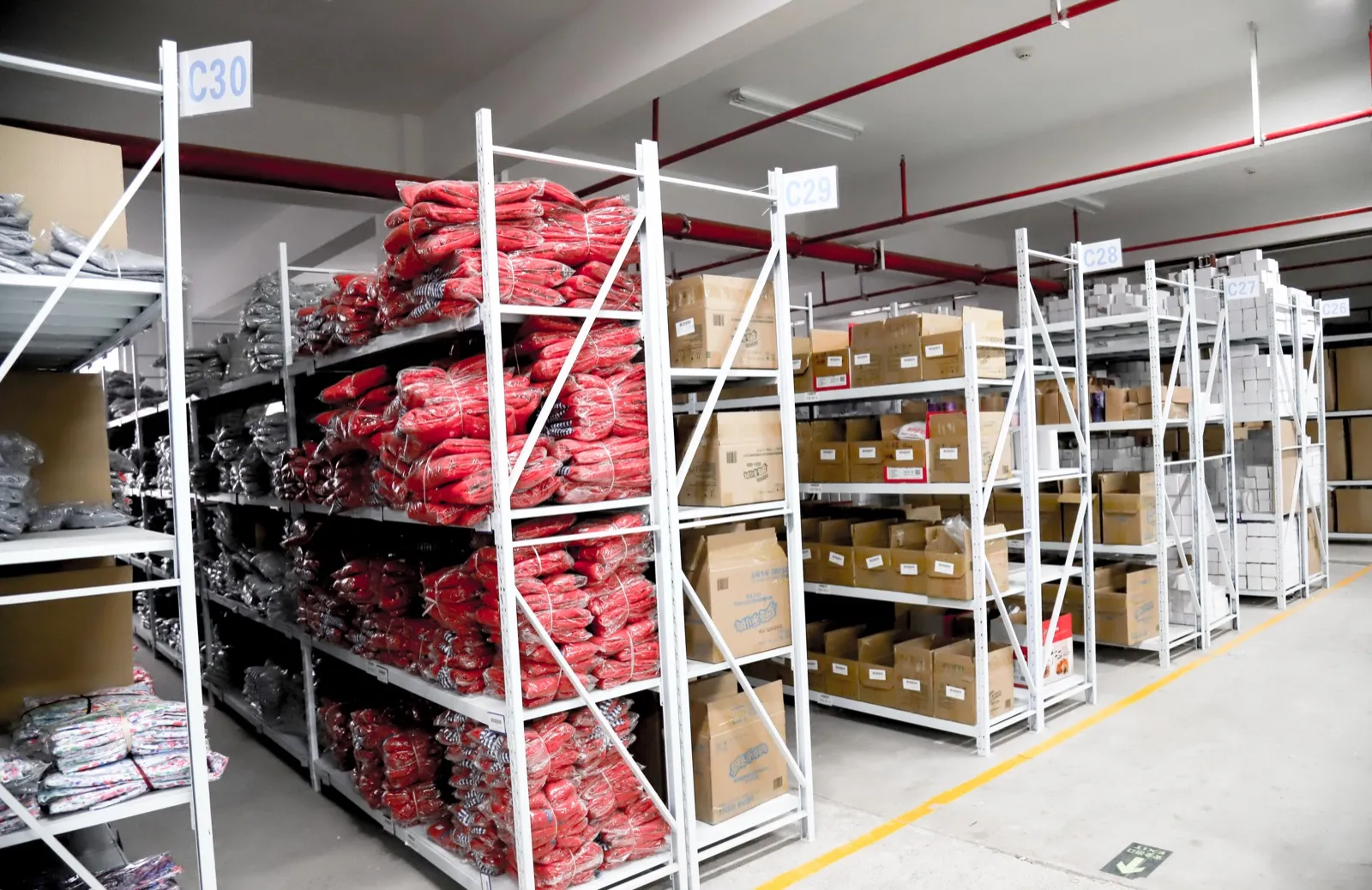
Our warehouses hold 3,000,000+ items across the catalog, so wholesale buyers do not have to wait for a production slot. Ready-to-ship best sellers leave the warehouse in 24-48 hours, and we accept mixed-style, mixed-color orders so you can test a range instead of betting on one SKU.
Need branding? Adding a logo to stocked styles takes 3-7 days. Small batches go door to door by DHL, FedEx, UPS or TNT in 5-7 working days; larger programs move by sea in 40-45 days or by rail.
Payment is flexible: T/T, L/C, D/P and D/A, credit card, PayPal, Western Union and more. After-sales issues get a response within 24 hours, with replacements, credits or technical support where needed.
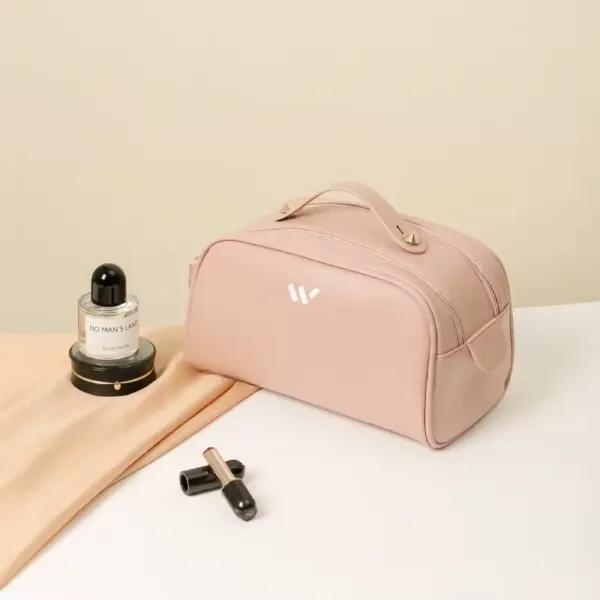
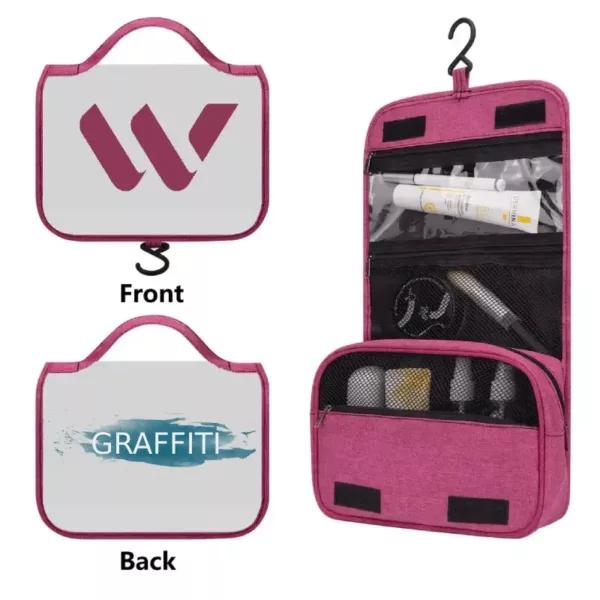
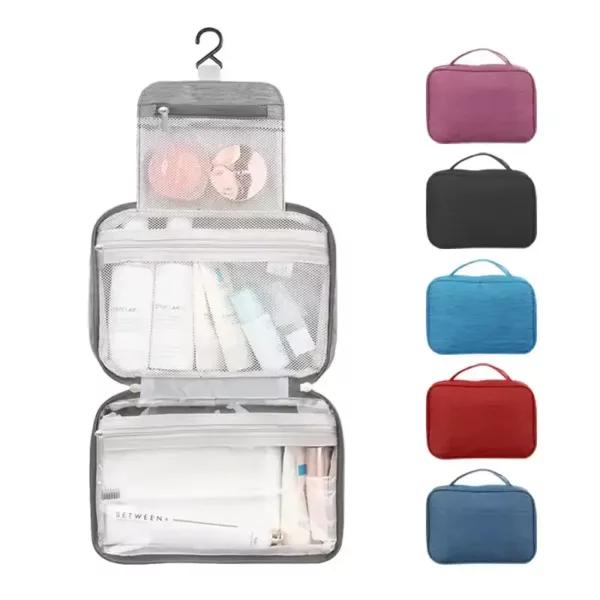
Buying questions, answered
What does wholesale mean at Camytonc?
Stocked catalog styles sold at tiered quantities, shipping in 24-48 hours for best sellers. Mixed styles and colors are accepted on the same order.
Can we add our logo to wholesale stock?
Yes. Logo application on ready-to-ship styles takes 3-7 days. Woven labels, metal plates, heat-pressed PVC and laser marks are all available.
How fast can a trial order arrive in the US or EU?
Best sellers ship from the warehouse in 24-48 hours, then DHL, FedEx, UPS or TNT delivers door to door in 5-7 working days.
Ready to sample your cosmetic bag line?
Send your brief and reference photos. Paid samples in 1-10 days, revisions in 2-3 days.
Materials and Construction for Makeup Pouches Wholesale
Most buyers start with a fabric name and stop there. That is a mistake. A polyester pouch and a nylon pouch with the same printed spec can feel completely different in hand, and that difference decides whether the product sells at $4 or $14. The right question is not “what material” but “what construction does this material allow.”
For wholesale makeup pouches, the shell fabric does three jobs at once. It gives the bag its shape, it protects what is inside, and it carries the print or logo. The lining does a fourth job. It handles spills. The industry reference is clear on this: cleanability depends on surface smoothness, seam construction, corner geometry, and material compatibility with expected residues. A buyer who skips the lining spec has not really specified the product.
| Material | What it is good for | Where it fails |
|---|---|---|
| Polyester fabric | Dimensional stability, wide print compatibility, many recycled-content options, lower cost at volume | Can feel thin or stiff in low GSM; absorbs oily residue unless coated |
| Nylon fabric | High strength-to-weight, good abrasion resistance, soft hand feel, takes dye well | Costs more than polyester; coating and weave strongly affect water resistance, so an uncoated nylon pouch is not leak-resistant |
| Canvas / cotton duck | Structure, texture, premium natural look, excellent for screen printing and embroidery | Absorbs moisture and stains easily without treatment; heavier; slower to dry |
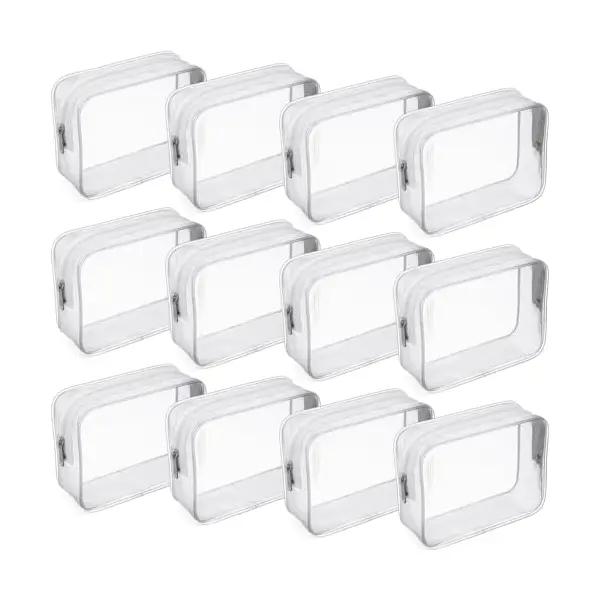
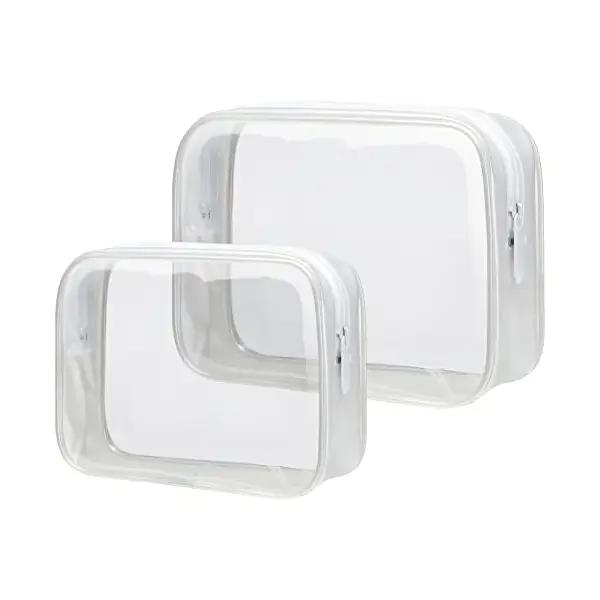
| Transparent film (PVC or TPU) | Visibility, wipe-clean surface, fast content identification, popular for travel and TSA lines | Can yellow or stiffen over time if low-grade plastic is used; seams are the weak point for leaks |
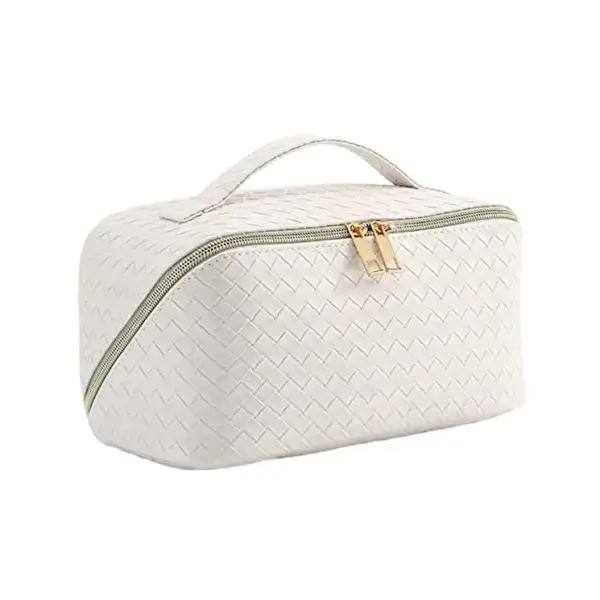
| Synthetic leather | Leather-like surface at lower cost, consistent color, easy to wipe clean | Coating can peel at high-flex points; breathability is zero; cheap PU cracks in cold storage |
Construction matters more than the fabric label. A stitched bag may still use a removable waterproof insert when full seam sealing is unnecessary. That is the reference talking, and it is the single most useful sentence for a buyer comparing bulk makeup bags. If your customer wants a wipe-clean pouch but your budget cannot support welded seams, specify a removable EVA or PEVA insert. The pouch stays simple. The spill problem moves to a part the user can rinse in a sink.
Welded or sealed seams provide better leak containment than ordinary stitched seams. But they cost more and require tooling. For a wholesale makeup pouch that will hold a foundation bottle and a damp sponge, a stitched shell with a wipe-clean liner is often the honest answer. Leak-resistant construction delays liquid escape. It is not guaranteed to remain liquid-tight under pressure. Nobody should print “leakproof” on a stitched pouch, no matter how good the zipper looks.
How Different Buyers Should Specify This Product
Say you are a subscription box brand. You order 3,000 pouches per quarter, and every one of them goes into a box that gets photographed for social media. Your specification should lead with color consistency and print registration. A Pantone delta E of 2.0 or lower is the working target. The pouch itself can be a simple flat zip style. What you cannot afford is a batch where the coral reads as salmon on camera. You also want a lining that does not smell like chemicals when the box is opened. Ask for airing time before packing.
Now say you run a beauty e-commerce store that sells brush sets. Your customer opens the pouch, sees a smudge of bronzer inside, and returns it. Your specification should lead with cleanability and seam construction. A clear film pocket on the inside is smart because the user can see what is where. But the real decision is the lining. A smooth coated or film-based inner surface that can be cleaned with limited moisture is what the reference calls wipe-clean. Specify that phrase. Then specify a drainage eyelet if the pouch might ever be rinsed. Most buyers forget the eyelet. It costs almost nothing and changes how the product is used.
A third buyer makes wholesale canvas makeup bags for a boutique chain. The stores want something that looks handmade but ships flat and survives a season. Your specification should lead with fabric weight and edge treatment. Canvas at 12 or 15 oz gives the structure buyers expect. The failure point is the zipper tape. If the zipper is sewn too close to the edge, the canvas frays and the slider jams. Specify a reinforced zipper guard and a box-X bartack at both ends. That is a ten-cent fix that prevents a visible return.
Each of these buyers is ordering the same category. The specifications are not interchangeable. The subscription box wants consistency. The e-commerce brand wants cleanability. The boutique wants durability at the edge. A factory that quotes all three the same way has not asked the right questions.
Customization That Changes Tooling, Cost, or Lead Time
Not all customization is equal. Some changes happen on the cutting table. Others happen in a mold shop. Buyers who understand the difference negotiate better and plan better.
What does not change tooling: fabric color changes within the supplier’s existing range, logo placement, zipper color, puller shape from a standard catalog, lining color, and the addition of a hang tag or poly bag. These are process changes. A factory can absorb them in the normal production flow. Lead time stays roughly the same. Cost moves a few cents per unit, if at all.
What does change tooling: a custom-shaped transparent film window, a molded plastic zipper puller with your logo, a custom embossed synthetic leather texture, or a welded seam pattern that requires new RF tooling. These are capital changes. The factory has to make a die, a mold, or a jig. That takes days or weeks before production starts. The unit cost may also rise because the factory amortizes the tooling across your order. If your order is 1,000 pouches, a $400 mold adds $0.40 per unit. If your order is 10,000 pouches, the same mold adds $0.04. The math changes everything.
There is a middle category too. A removable insert is a specification change, not a tooling change. The insert can be die-cut from a standard sheet. A hanging hook requires reinforcement because the complete load is concentrated at one attachment point. That is a construction change. It adds a patch, a bartack, and maybe a rivet. It does not require new tooling, but it does add labor and a failure point. Be honest about whether the hook is worth it. For a travel pouch that hangs on a hotel door, yes. For a flat pouch that lives in a drawer, no.
One more thing. Elastic loops separate cylindrical containers, brushes, and small tools. They are cheap to add, but they change the sewing sequence. If you add loops after sampling, the factory has to re-sequence the line. That can add a day or two. It is not tooling, but it is not free either. Specify loops before the sample is approved, not after.
What to Check Before Approving Production
Approval is not a signature. It is a list of things you checked. For makeup pouches, that list should come from the reference and from your own failure modes.
First, check the seam. A stitched seam on a coated fabric is only as good as the needle hole. If the needle is too large, the coating tears and the seam leaks. Ask for a seam sample with the actual thread and needle size. Pull it. If the thread cuts the fabric, the needle is wrong. This is not a cosmetic issue. It is the difference between a pouch that survives a dropped foundation bottle and one that splits on day three.
Second, check the zipper. Open and close it twenty times. Then do it with the pouch full. The zipper should not catch on the lining. The slider should not require force. If the zipper tape is sewn too close to the fabric edge, it will fray. If the teeth are exposed on the inside, they will scratch a compact mirror. Specify a zipper guard or a covered zipper. It costs nothing and prevents a visible defect.
Third, check the claim you plan to print. Leak-resistant and leakproof are not the same thing. The reference defines leak-resistant as construction that delays liquid escape but is not guaranteed to remain liquid-tight under pressure or prolonged exposure. Leakproof means designed and tested to prevent liquid passage under stated test conditions. If you have not stated the test conditions, you cannot print “leakproof.” If you have, get the test report. Do not accept a factory’s verbal assurance. The same goes for “wipe-clean.” That phrase implies a smooth coated or film-based inner surface. If your lining is raw polyester, it is not wipe-clean. It is just polyester.
Fourth, check the corners. Corner geometry affects cleanability. A sharp corner traps powder and residue. A rounded corner releases it. This matters for clear PVC makeup bags and any pouch with a film lining. Ask the factory to show you the corner construction on the actual sample, not a drawing. If the corner is folded and stitched, it will hold residue. If it is welded or die-cut as a single piece, it will clean easier.
Finally, check the print. A wholesale makeup pouch is a small canvas. If your logo is three inches wide, it will look different on a 9-inch pouch than it did on your laptop screen. Request a printed strike-off on the actual fabric, not a paper proof. Check the registration, the ink adhesion, and the color under store lighting. A Pantone delta E of 2.0 or lower is the working target for customized makeup bags wholesale. If the factory cannot hit that, you have a problem before production starts.
These checks take an afternoon. They prevent a container of pouches that look right in a photo and wrong in a customer’s hand. That is the whole job.