Bulk Cosmetic Bags: A Buyer's Guide to Fabrics, MOQs and Logos
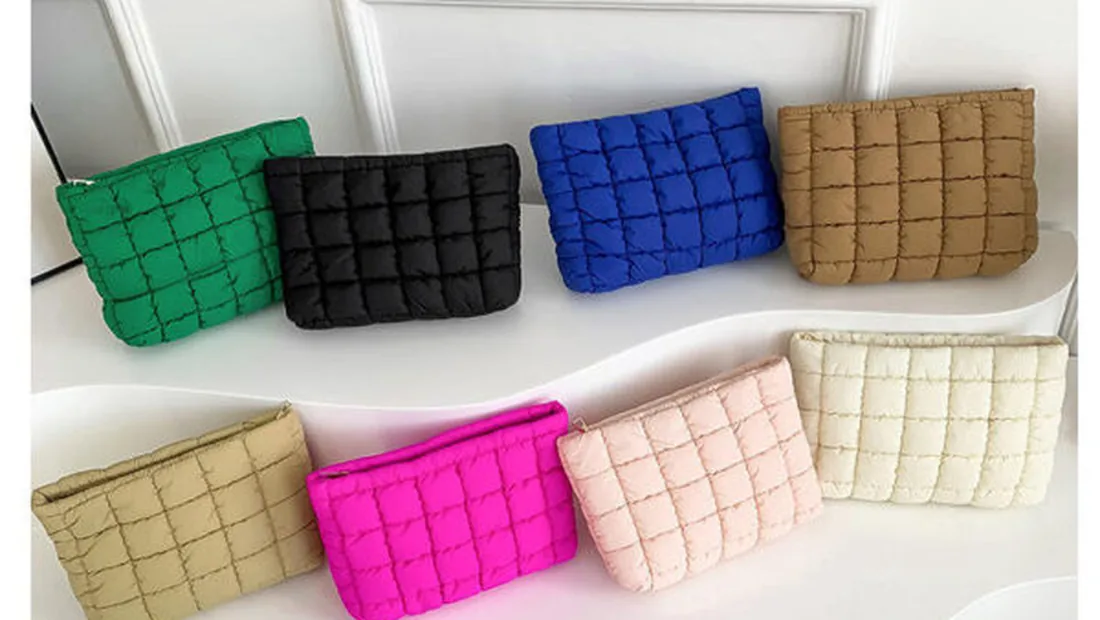
When a buyer asks for bulk cosmetic bags, the first question is never about price. It's about use. A hotel amenity program has different needs than a subscription box or a retail private label line. The fabric, closure and logo process all follow from that one decision. Get it wrong and you either overpay for durability you don't need or ship a bag that fails in the customer's hands. This guide walks through the scoping decisions in the order a sourcing manager actually makes them.
How to scope a bulk cosmetic bag order before you ask for quotes
Say a subscription-box brand wants a small pouch for a monthly beauty delivery. The bag sits in a box, gets opened once, and lives on a bathroom counter. It doesn't need heavy canvas or a waterproof liner. A retail private label line, though, sits on a shelf and gets handled by dozens of shoppers before it's sold. That bag needs structure, a clean finish and a logo that won't peel.
Start with end use. Then pick a fabric tier. Then pick a closure. Only after the fabric is chosen should you think about logo process, because screen print behaves differently on canvas than on clear PVC. A buyer who specifies embroidery on a film surface has already created a production problem.
Here's the sequence that avoids rework:
- Define the end use: hotel amenity, subscription box, or retail private label
- Choose a fabric tier based on durability versus price trade-off
- Pick a closure type that matches the fabric and the use case
- Specify the logo process only after the fabric is locked
Most quote requests skip step one. That's why they get three wildly different prices back and no way to compare them.
Comparing fabric tiers for bulk cosmetic bags
Four fabric families cover most bulk cosmetic bag orders. Each has a clear trade-off.
Canvas
Canvas is a durable plain-woven fabric, usually cotton or a blend. It gives structure and texture. It feels substantial in the hand, which reads as higher perceived quality. It costs more than basic polyester and weighs more in shipping. Canvas takes screen print and embroidery well. It's the default choice for retail private label lines that want a natural, premium feel.
PU
PU means polyurethane coated or laminated onto a backing fabric. It gives a leather-like surface that wipes clean easily. The cost is moderate. PU handles heat transfer logos well because the surface is smooth and non-porous. It's common for mid-tier retail and subscription boxes that want a clean, modern look without the price of real leather.
Nylon
Nylon fabric offers high strength-to-weight performance and good abrasion resistance. It's lighter than canvas and packs flat. The coating and weave strongly affect water resistance, so a coated nylon can be quite different from an uncoated one. Nylon is a solid choice for travel-focused cosmetic bags that need to survive being tossed into a suitcase.
Clear PVC
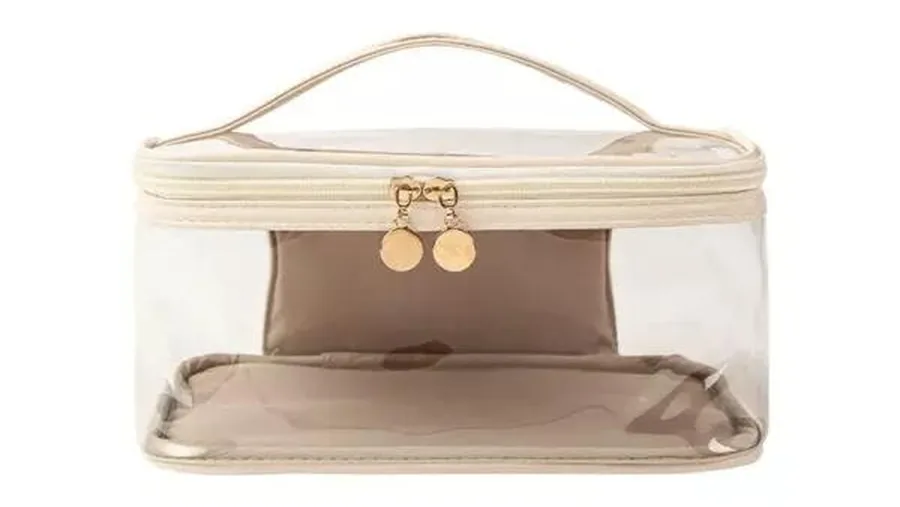
Clear PVC is a transparent film used for visibility and wipe-clean pockets. It's stiffer than fabric and offers strong moisture resistance. TSA-style clear bags and makeup organizers use it. It shows contents immediately, which is the whole point. Logo application is usually heat transfer or print on the film surface.
No fabric is universally better. The right one depends on what the bag has to survive.
How closure type affects unit cost and failure risk
Closure choice changes both labor cost and failure risk. It's also one of the questions ranking pages rarely answer well.
Zip closures
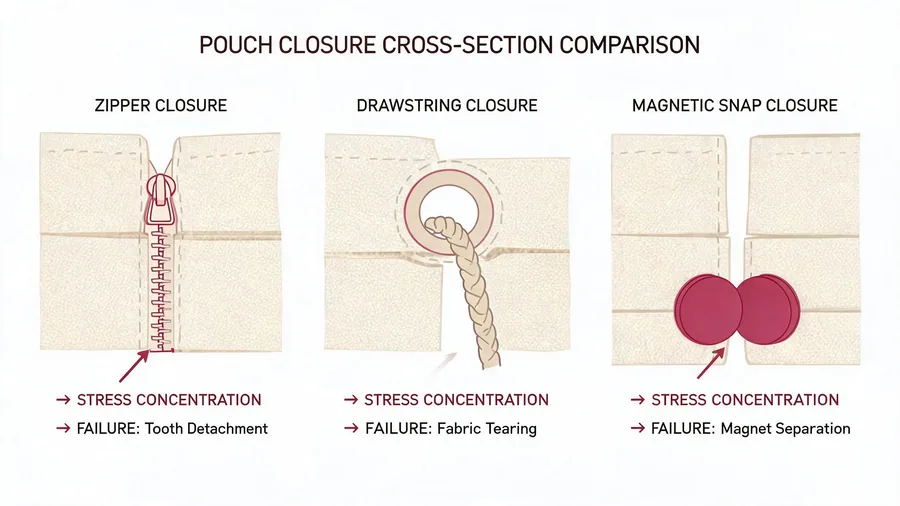
A zipper is the most secure option. It keeps contents inside and gives a clean, finished look. It also adds component cost and sewing labor. A badly sewn zipper is the most common failure point in a cosmetic bag. The zipper tape must match the fabric, and the slider needs to run smoothly after the bag is turned right side out. For retail and subscription boxes, zip closure is usually worth the cost.
Drawstring closures
A drawstring is simpler. Less hardware, less labor, lower cost. It doesn't seal liquids and it doesn't give the same structured opening. Drawstrings work for amenity kits and promotional giveaways where the bag holds a few items and cost per unit is the main driver.
Snap closures
Snaps give quick access. They're cheap and easy to sew. But they don't seal anything. A snap closure on a bag meant to hold liquids or small loose items is a recipe for spills. Snaps suit flat pouches and simple organizers, not travel toiletry bags.
Leak control is a separate decision from closure type. Welded or sealed seams provide better leak containment than ordinary stitched seams. A stitched bag can still use a removable waterproof insert when full seam sealing is unnecessary. If the bag must contain a shampoo leak, that's a seam decision, not a zipper decision.
Matching logo process to fabric choice
Logo process interacts with fabric in ways that aren't obvious until a sample comes back wrong.
Screen print
Screen print works on flat woven fabrics like canvas and polyester. The ink sits on the surface and needs a relatively smooth, absorbent base. It's cost-effective at bulk quantities and holds fine detail well. On textured or coated surfaces, screen print can crack or peel.
Embroidery
Embroidery works on structured fabrics like canvas. The needle needs a fabric with enough body to hold the stitches without puckering. Embroidered logos look premium and last the life of the bag. Embroidery on thin nylon or film surfaces is difficult and usually looks bad. Thread count and backing choice matter more than most buyers expect.
Heat transfer
Heat transfer suits coated or film surfaces like PU and clear PVC. The smooth, non-porous surface bonds well with the transfer. Heat transfer on canvas can work but tends to sit on top of the weave and can crack with flexing. It's the standard choice for PU and PVC bags.
Pantone color matching is a separate approval step. A buyer may specify a brand color on a canvas bag and get a screen print that looks slightly off. That's not a defect. It's a color standard issue. The lab dip or strike-off approval exists precisely to catch this before bulk production.
How order size changes lead time and customization flexibility
Order size drives what's realistic. A buyer ordering 800 units in three colors has different options than one ordering 20,000 units in twelve colors.
Smaller orders favor ready-to-ship styles with simple logo placement. The bag body already exists. You pick a color, add a one-color logo, and ship. Customization is limited to what the existing pattern allows. Lead time is short because there's no fabric sourcing or pattern work.
Larger orders open more fabric, color and closure customization. At higher volumes, a factory can justify running a specific fabric color, adding a custom zipper pull, or changing the gusset depth. These changes require sampling before bulk production. That adds time but gives you a bag that matches your spec exactly.
Fully custom orders always require sampling. A proto sample comes first to check shape and construction. A pre-production sample follows, made with the actual bulk materials. Only after the golden sample is approved does bulk production start. Rush options exist. They trade cost for shorter production time, usually by prioritizing your order in the cutting and sewing queue. The trade-off is real and it's priced accordingly.
Three buyer scenarios compared
The table below shows how the same decisions play out for three common buyer types.
| Buyer scenario | Fabric tier | Closure type | Logo process |
|---|---|---|---|
| Hotel amenity | Lower-cost fabric, often polyester or basic canvas | Drawstring or snap | One-color screen print |
| Subscription box | Mid-tier fabric, often PU or coated nylon | Zip | Screen print or heat transfer |
| Retail private label | Higher-tier fabric, often canvas or structured PU | Zip | Embroidery or detailed heat transfer |
Hotel amenity programs optimize for cost per unit. The bag is a container, not a product. Subscription boxes optimize for presentation and a clean unboxing moment. Retail private label optimizes for shelf appeal and durability, because a returned bag costs more than a slightly more expensive one.
Questions to answer before you send a spec
Before you write a single line of a spec sheet, answer these four questions. They force the decisions that make a quote useful.
- What is the end use and target retail price? This sets the fabric tier.
- What fabric tier and closure type do you need? This sets the construction.
- What logo process and artwork readiness do you have? Vector files or just a PNG?
- What order quantity and delivery window are you working with? This sets feasibility.
If you can answer all four, a supplier can give you a real quote. If you can't, you'll get a price range so wide it's useless. The scoping work is the buyer's job. No factory can do it for you.
When you're ready to scope a bulk cosmetic bag order, the fastest path is to send a spec. Describe the end use, fabric tier, closure type and logo process. A clear brief gets a clear quote. Bulk makeup bags and clear PVC makeup bags are common starting points. For a deeper look at one fabric decision, see clear cosmetic bags in bulk.
Frequently Asked Questions
Where can I bulk buy makeup bags?
Direct from a manufacturer or through a wholesale distributor. A manufacturer gives you more control over fabric, closure and logo but usually requires a higher minimum order. A distributor offers lower minimums but less customization. For a private label line, go direct. For a one-off promotional run, a distributor may be faster.
Where can I buy bulk cosmetics cheaper than wholesale?
The cheapest source is usually a factory-direct order at a higher quantity. Wholesale distributors mark up the unit price to cover their own warehousing and handling. If you can meet a factory's minimum order quantity and wait for production lead time, you cut out that middle layer. Ready-to-ship stock with a simple logo is the fastest low-cost route.
Where can I buy high end makeup wholesale?
High end makeup bags come from manufacturers that specialize in structured fabrics like canvas and PU, with embroidery or detailed heat transfer logos. Look for a supplier that does pre-production samples and uses a golden sample for bulk comparison. The bag itself is a container, but the fabric tier and finish define whether it reads as premium.
Where can I buy wholesale makeup supplies?
Makeup supplies include the bags, organizers and pouches that hold cosmetics. The same sourcing logic applies: define the end use first, then pick a fabric and closure. A subscription box needs a different bag than a retail display. Ask any supplier about their sampling process and lead time before you commit to an order.