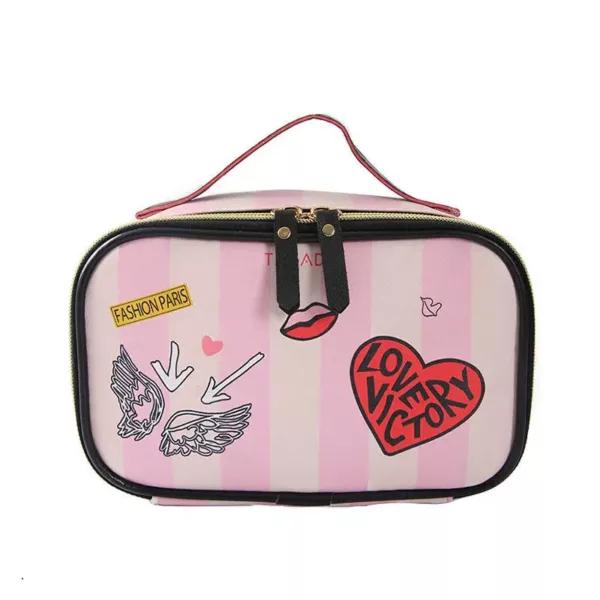
MB-6194 · Makeup Bag
Silver Quilt Reusable Pattern Travel Cosmetic Bag
- MaterialPU
- Dimensions21 x 8 x 13 cm; 0.125 kg
- ColorCustomized Made
- Custom LogoAccept Customized Logo
Lead time
| Quantity | Production time |
|---|---|
| 1-100 pieces | 15 days |
| 151-500 pieces | 25 days |
| > 500 pieces | To be negotiated |
Paid sample in 1-10 days. 24-hour response on every inquiry.
Why buyers pick this style
- Streamlined, travel-ready shape. The quilted silhouette keeps your daily essentials organized without adding bulk. It slips into a carry-on or tote, so you're packed and out the door.
- Premium PU build. The exterior is made from PU that holds up to regular use. It resists scuffs and wipes clean, so the bag keeps its look trip after trip.
- Waterproof outside, dustproof inside. Spills and dirt stay away from your makeup. The coated surface and lined interior work together to keep contents protected.
- Simple organization. The main compartment gives you enough room for brushes, bottles, and compacts. It's easy to see what you packed, and repacking takes seconds.
- Custom logo and colors. We accept customized logos and made-to-order colors. You can match the bag to your brand palette or campaign.
This quilted cosmetic bag keeps makeup and toiletries protected in a compact 21 x 8 x 13 cm shape. It's made from PU, weighs just 0.125 kg, and comes with a waterproof exterior and dustproof interior. We accept custom logos and made-to-order colors, with lead times starting at 15 days for small runs.
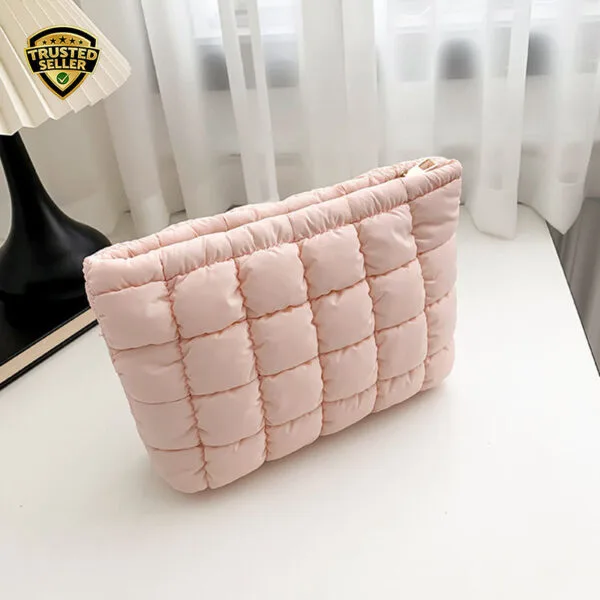
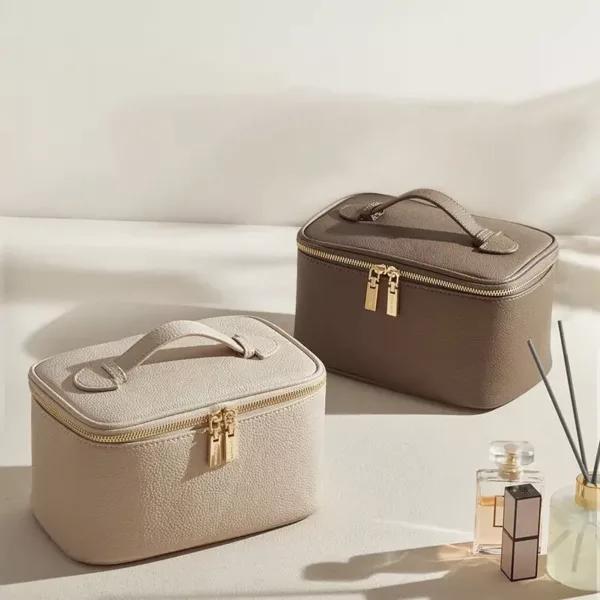
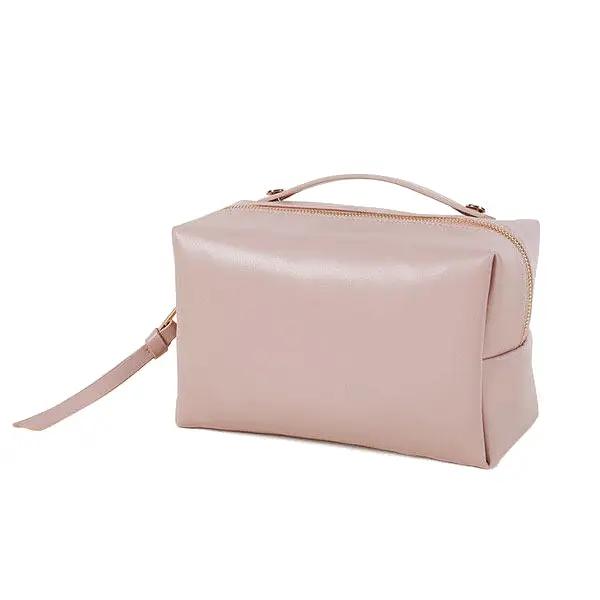
Ready to sample your cosmetic bag line?
Send your brief and reference photos. Paid samples in 1-10 days, revisions in 2-3 days.
What the Silver Quilt Reusable Pattern Travel Cosmetic Bag Is Good At, and Where It Falls Short
The Silver Quilt Reusable Pattern Travel Cosmetic Bag works because the spec is honest about what it is. A PU shell at 21 x 8 x 13 cm and 0.125 kg is a daily carry pouch, not a train case. You've seen the photos. You know the silhouette. This section explains the trade-offs behind the numbers.
PU is a coated composite. It gives you a smooth, wipe-clean face and a surface that resists scuffs in normal use. That's the upside. The downside is stiffness and heat sensitivity. A buyer who packs this bag into a hot car or a steamy bathroom will notice the material softens. It recovers, but it's not a fabric that breathes. If your customer wants a soft, slouchy pouch, this is the wrong base. If they want a structured, easy-to-wipe organizer, it's right.
The size matters more than most brands admit. At 21 cm long, 8 cm deep, and 13 cm tall, the bag holds a flat lay of compacts, a few brushes, and travel bottles. It will not hold a full-size hairbrush standing upright. It will not hold a 200 ml pump bottle with room to spare. Say a buyer packs it for a weekend trip. That works. Say they try to use it as a primary makeup kit for a professional artist. That fails. The bag is a travel companion, not a studio case.
Here's the table that maps each published value to real-world use.
| Published spec | What it means in use | What to watch for |
|---|---|---|
| Material PU | Wipe-clean surface, scuff resistance, structured shape | Stiffens in cold, softens in heat, no breathability |
| Dimensions 21 x 8 x 13 cm | Fits a carry-on or tote, holds flat compacts and short brushes | Too short for full-size brushes standing up, too narrow for large bottles |
| 0.125 kg | Light enough to toss into any bag without adding bulk | Light weight means thin lining and no heavy reinforcement |
| Color Customized Made | You can match brand palettes and campaign colors | Pantone matching on PU shifts with batch and coating thickness |
| Custom Logo Accept Customized Logo | Logo placement is flexible on the quilted face | Quilting texture can distort fine logo details |
One more honest note. The waterproof exterior and dustproof interior are design claims, not test certificates. They mean the coated surface repels casual spills and the lining keeps powder from migrating. They do not mean you can submerge the bag. If your customer needs a sealed, submersible pouch, this SPU is not the one to sample. If they need a bag that survives a foundation leak in a tote, it's a reasonable candidate.
How Buyers Customize This SPU, and What Each Change Costs You
Customization on this bag splits into two lanes. The first lane is routine. The second lane needs new tooling or a longer runway.
Routine changes include color, logo method, and lining color. You can pick a made-to-order color. You can add a woven label, a metal plate, a heat-transfer print, or a debossed logo. Each method has different minimums and lead times. Logo method affects minimums and lead time. Confirm the current MOQ for your chosen method with our team before you commit. A buyer who wants a debossed logo on the quilted face should know that the quilting pattern can interrupt fine lines. Test the logo on the actual quilted panel, not on a flat swatch.
Color matching on PU is a conversation, not a checkbox. The coating thickness, the batch of base fabric, and the texture of the quilt all shift how a Pantone reference reads. Confirm the Pantone tolerance with your account manager before sampling. A visual match under store lighting may fail under daylight. Worth asking for a lab dip before you approve bulk.
The second lane is structural change. If you want a different size, a different quilting pattern, an added pocket, a hanging hook, or a different material, you are no longer customizing this SPU. You are developing a new one. That means new patterns, new cutting dies, and a new sampling cycle. Lead time moves from the published table to a negotiated schedule. Say a buyer wants this exact bag but 25 cm long. That's a pattern change. It is not a color change. Treat it as a new development project.
For more on how material choices affect a cosmetic bag program, see our makeup bag materials guide. You can also review our custom cosmetic pouch options if you want to start from a different base.
What to Confirm Before You Approve Sampling on This Product
Sampling is where most rework happens. Not because the factory makes mistakes. Because the buyer's brief and the buyer's mental image don't match. Here are the checks worth writing into the approved sample.
First, confirm the logo placement on the quilted face. The quilting creates highs and lows. A logo that crosses a quilt line looks different than one that sits inside a quilt diamond. Specify the exact placement. Send a marked-up photo, not a description.
Second, confirm the lining color and material. The spec says dustproof inside. That doesn't tell you the lining color or hand feel. A buyer who assumes a light gray lining and receives a black one will reject the sample. Specify it.
Third, confirm the zipper. The spec doesn't name a zipper brand or size. Ask for the zipper type, the puller shape, and the slider finish. A chunky metal puller on a 0.125 kg bag feels wrong. A tiny nylon puller feels cheap. Specify the puller.
Fourth, confirm the edge finish. PU edges can be raw, painted, or bound. Raw edges on PU look unfinished after a few weeks of use. Ask for a bound or painted edge. Specify it in the sample notes.
Fifth, confirm the packaging. The bag ships in something. That something affects your landed cost and your customer's unboxing. Specify poly bag, color box, or hang tag plus poly bag. Don't leave packaging to the factory's default.
If you're still comparing travel-size constraints, our TSA quart-size bag dimensions post covers how carry-on rules shape cosmetic bag design. It's a useful reference before you lock this SPU for a travel-focused line.