How to Choose a Cosmetic Bag Manufacturer: 9 Checks
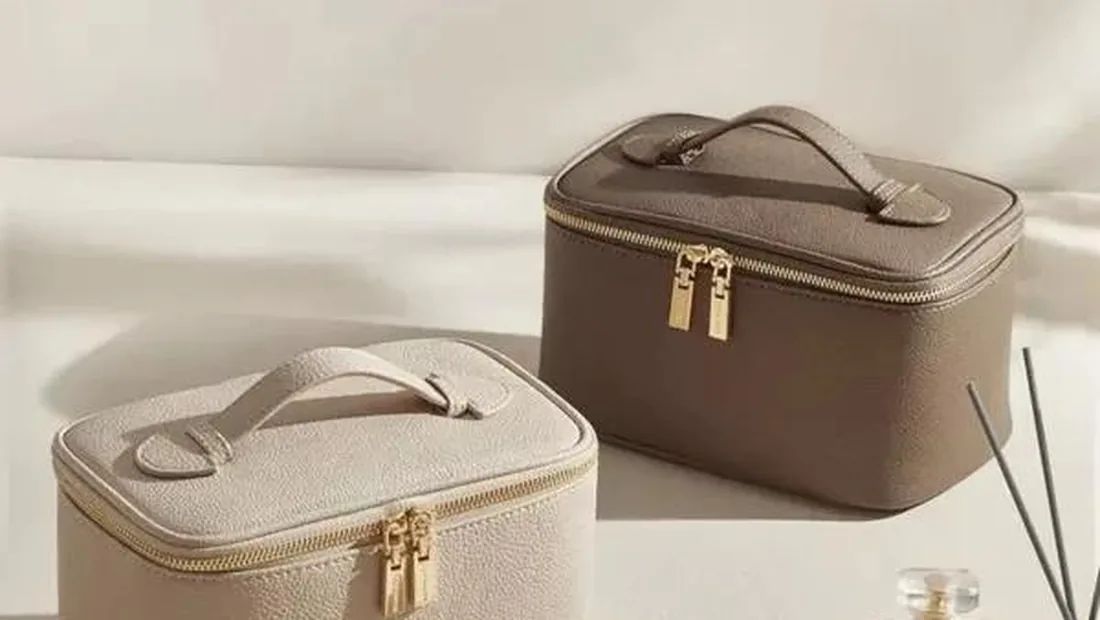
Choosing a cosmetic bag manufacturer is not a one-call decision. You are picking a production partner for a product that holds liquids, powders, brushes, and sometimes electronics. The wrong factory choice shows up later as leaking liners, broken zippers, or a color that drifts from your brand standard. This guide gives you nine checks. Run them in order. Some buyers skip the early checks and regret it.
A real cosmetic bag manufacturer should answer each question with specifics. Not vague promises. Specifics include tolerances, material names, test methods, and per-color minimums. If a factory cannot answer, that is your answer.
1. Check Category Specialisation First
Many bag factories say they make cosmetic bags. Few treat them as a core category. Ask how many cosmetic bag SKUs they run per year. Ask which brands they serve. You may not get brand names, and that is normal. But the factory should be able to describe the product types without pausing. Makeup bags, toiletry kits, brush rolls, hanging organizers, clear pouches, wet-dry bags. A specialist knows the difference between a brush guard and a drainage eyelet.
What a good answer sounds like: "We run cosmetic and toiletry bags as a dedicated line. Our team handles clear film pockets, elastic loops, and removable inserts every week." What a weak answer sounds like: "We can make any bag." That is a red flag. A factory that makes everything often masters nothing.
Check their product pages. Do they show mesh cosmetic bags with drainage details? Do they discuss custom pouch construction beyond printing? Category depth shows in the product photography and the technical descriptions.
2. Ask About Lining and Leak Behaviour
Cosmetic bags fail from the inside out. Foundation leaks, shampoo drips, and loose powder works into seams. The lining decision matters more than the outer fabric. Ask what lining options they offer and what each one does.
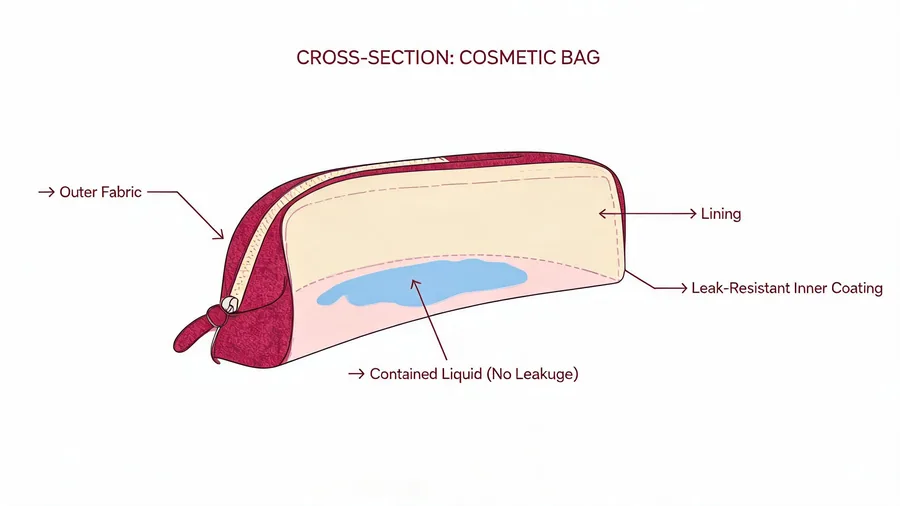
You want to hear about coated liners, film liners, and removable inserts. A wipe-clean lining resists absorption. A sealed seam delays liquid escape. A leakproof construction is tested under stated conditions. These are different claims. Do not let a factory blur them.
Ask how they test. The factory should describe a cosmetic bag leak test with a defined liquid volume, duration, and pass criterion. Exact numbers depend on your specification. That is fine. The point is that they have a method. If they say "we sew it tight," move on.
For wet-use products, ask about drainage eyelets. A reinforced opening lets water escape from a washable compartment. Not every bag needs one. But a factory that understands when to add one is a factory that thinks about how people actually use the product.
3. Zipper and Hardware Sourcing
The zipper is the most handled component on a cosmetic bag. It gets opened and closed daily, sometimes with damp hands. Ask where the zippers come from. A good factory names the supplier or the standard. They know the difference between a coil zipper, a molded tooth zipper, and a metal zipper. They can recommend one for a curved opening versus a straight one.
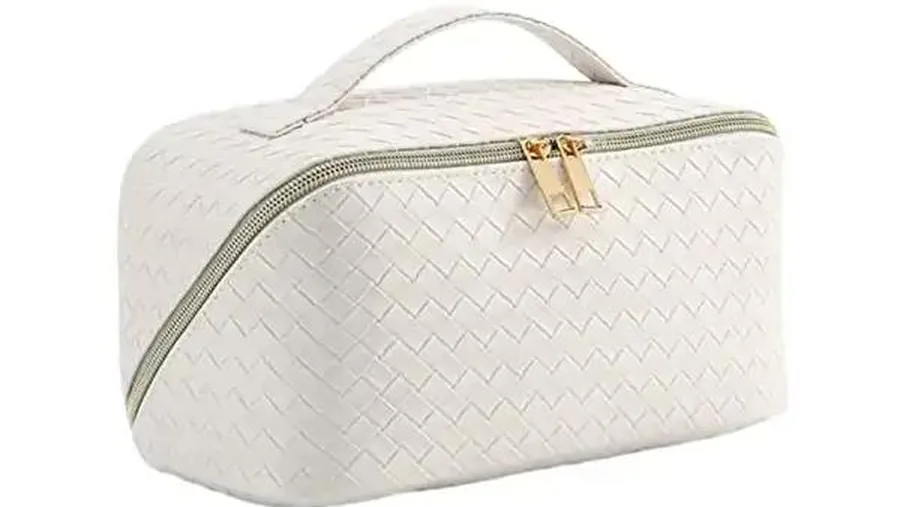
Ask about zipper cycling tests. The factory should be able to describe how they evaluate operating force and durability over repeated cycles. Again, the exact cycle count depends on the agreed specification. What matters is that they test it.
Hardware includes sliders, pulls, rings, hooks, and snaps. Ask about corrosion resistance. A cosmetic bag lives in humid bathrooms. Metal finishes fail there. A factory that mentions corrosion testing or coated finishes is paying attention.
If you want a specific hardware finish, ask for a physical sample. Photos lie. The finish looks different in your hand. This is one of the cheapest checks you can run.
4. Printing Capability for Your Artwork Type
Your artwork type determines the right printing method. A one-color logo on a woven label is not the same job as a full-color illustration on a PVC panel. Ask the factory which methods they run in-house and which they outsource.
Common methods include screen printing, heat transfer, sublimation, embossing, debossing, and woven labels. Each has different setup costs, minimums, and durability. A factory that asks about your artwork file format, color count, and placement before quoting is doing it right.
Ask about strike-offs. That is a printed sample used to approve artwork, color, scale, and registration. You should approve one before bulk production. If the factory skips this step, you are gambling on the final print.
For low minimums, glitter cosmetic bags and printed pouches often need a different approach than woven labels. Ask what the per-method minimum is. Do not accept a blanket MOQ for printing. It varies by method.
5. Colour Matching Discipline
Your brand color is not negotiable. A cosmetic bag that ships two shades off looks like a knockoff. Ask the factory how they control color.
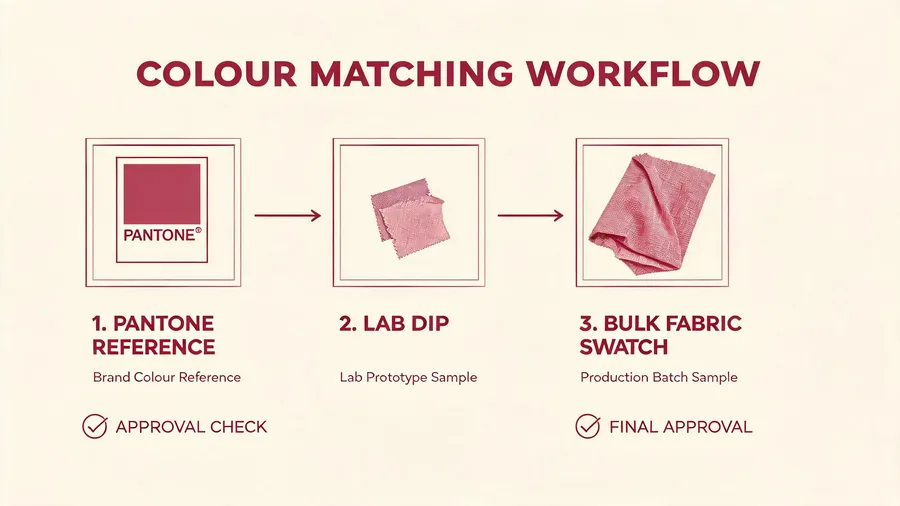
The answer should include Pantone references, lab dips, and a stated tolerance. A lab dip is a small dyed sample submitted for approval before bulk production. You approve the dip, then they match production to it.
Ask about the tolerance. A common discipline is Delta E of 2.0 or less. That means the color difference is barely visible to most eyes. The factory should state their tolerance and how they measure it. They should also tell you the per-color minimum. Some colors need a higher minimum because the dye lot is small. At Camytonc, a single Pantone color match starts at 200 pieces. That is a useful reference point when you are comparing quotes.
If a factory says "we match Pantone" but cannot tell you the tolerance or the per-color minimum, they are not doing color control. They are hoping.
6. Sampling Turnaround
Sampling speed tells you how the factory handles change. A slow sample line usually means a slow production line. Ask how long a first sample takes.
At Camytonc, sampling runs 1 to 10 days depending on complexity. A revision round takes 2 to 3 days. That is a useful benchmark. Faster is better, but only if the quality holds. Slower is not automatically bad for complex constructions. But it tells you something about their capacity.
Ask what kind of sample you get. A proto sample checks concept and shape. A pre-production sample uses your actual bulk materials and approved methods. You want the second one before you authorize mass production. If the factory only offers proto samples, ask why.
Samples are paid. Anyone offering free samples is either padding the unit price or sending you something off the shelf. Neither helps you.
7. MOQ Structure
MOQ is not one number. It varies by material, color, printing method, and construction. A factory that gives you a flat MOQ for everything is simplifying too much.
Ask for the MOQ breakdown. For a standard makeup bag at Camytonc, the MOQ is 500 pieces. For a cooler bag, it is also 500. A backpack starts at 500 for basic designs and 1,000 for special fabrics. Woven bags range from 50 pieces for leather-trimmed styles to 500 for special functional materials. These numbers matter because they tell you where the factory's real setup costs sit.
Ask what happens if you split colors. A 500-piece order across five colors is really five 100-piece runs. Some factories charge more for that. Others fold it into the price. Get it in writing.
Low MOQs are not always good. A factory that takes 50-piece orders may be a trading company. A factory that holds a 500-piece minimum on a complex printed bag is protecting its margin and your quality. Understand the difference.
8. Social-Compliance Audits
Your brand carries the compliance risk. If the factory has labor or safety violations, that lands on you when a customer or a regulator asks questions. Ask for the audit report.
A BSCI audit is a common starting point. It covers labor rights, working hours, health and safety, and environmental practices. Camytonc's factory is BSCI-certified. That means an independent auditor has walked the floor. Ask for the report date and the grade. An old audit is not worthless, but a recent one is better.
Ask about corrective actions. Every audit finds something. What matters is what the factory did about it. A factory that shows you the corrective action plan is being honest. A factory that says "we passed everything" is not.
You can also ask for ISO 9001, SGS, TUV, and GRS documentation. These cover quality management, testing, and recycled content. Not every certification matters for every product. But the presence of several tells you the factory invests in systems, not just sewing machines.
9. How the Factory Handles a Failed Inspection
Every factory fails an inspection at some point. The question is what happens next. Ask the factory to walk you through their process for a failed lot.
A good answer includes root cause analysis, rework or replacement, and a timeline. The factory should tell you who pays for the rework and who covers the shipping if the goods are already in transit. At Camytonc, the stated after-sales policy is a 24-hour response with replacements, credits, or technical support. That is the minimum you should expect.
Ask about defect classification. The factory should assign critical, major, or minor severity based on risk. A critical defect is a safety or function failure. A minor defect is a loose thread. The response should differ.
Ask for a recent example. They may not share client names, but they can describe the defect and the fix. If they cannot think of one, they are either lying or they do not inspect. Both are disqualifying.
Comparison Table: What to Ask and What to Hear
| Check | Weak answer | Strong answer |
|---|---|---|
| Category focus | We make all bags | Cosmetic bags are a dedicated line with weekly production |
| Leak control | We sew it tight | We run a defined leak test with stated volume and duration |
| Zipper sourcing | Good quality zippers | Named supplier, cycling test, corrosion check on hardware |
| Printing | We can print anything | Method matched to artwork, strike-off before bulk |
| Color matching | We match Pantone | Delta E tolerance stated, lab dips, per-color minimum |
| Sampling | Fast samples | 1-10 days first sample, 2-3 days revision, PPS available |
| MOQ | 500 pieces flat | Breakdown by material, color, and printing method |
| Audits | We passed everything | BSCI report with date, grade, and corrective actions |
| Failed inspection | That never happens | Root cause, rework plan, 24-hour response, credit policy |
Putting the Checks Together
You do not need all nine answers on the first call. But you need them before you pay a deposit. Start with category focus, lining, and zippers. Those are the bones of the product. Then move to color, sampling, and MOQs. Those are the commercial terms. Finish with audits and failure handling. Those are the risk controls.
One more thing. Ask for references. Not names. Ask for the types of clients they serve and the regions they ship to. A factory that ships to the US and Europe regularly understands labeling, packaging, and transit conditions. A factory that only sells domestically may not.
Check our top 10 cosmetic bag manufacturers list to see how Camytonc compares on these checks. Then read our about page for the factory details behind the claims. If you are still comparing, the blog index covers more sourcing topics.
Frequently Asked Questions
What is a realistic MOQ for a custom cosmetic bag?
For a standard makeup bag, expect 500 pieces. That covers setup costs for cutting, sewing, and basic printing. Complex materials or multiple colors can push it higher. A single Pantone color match may start at 200 pieces. Always ask for the breakdown, not a flat number.
How long does sampling take?
A first sample typically takes 1 to 10 days. A revision round takes 2 to 3 days. Add shipping time. If you need a pre-production sample with your actual bulk materials, ask for it explicitly. That sample takes longer but catches problems before mass production.
Can I get a leakproof cosmetic bag?
Yes, but only if the factory tests the complete product. A leakproof claim requires a defined liquid-containment test with stated conditions. A coated lining alone is not leakproof. Ask for the test method and the pass criterion before you put the claim on your packaging.
What if the factory fails my inspection?
Ask for the corrective action plan before you place the order. A good factory responds within 24 hours, identifies the root cause, and offers rework, replacement, or credit. If they cannot describe this process, find another factory.
Frequently Asked Questions
What is a realistic MOQ for a custom cosmetic bag?
For a standard makeup bag, expect 500 pieces. That covers setup costs for cutting, sewing, and basic printing. Complex materials or multiple colors can push it higher. A single Pantone color match may start at 200 pieces. Always ask for the breakdown, not a flat number.
How long does sampling take?
A first sample typically takes 1 to 10 days. A revision round takes 2 to 3 days. Add shipping time. If you need a pre-production sample with your actual bulk materials, ask for it explicitly. That sample takes longer but catches problems before mass production.
Can I get a leakproof cosmetic bag?
Yes, but only if the factory tests the complete product. A leakproof claim requires a defined liquid-containment test with stated conditions. A coated lining alone is not leakproof. Ask for the test method and the pass criterion before you put the claim on your packaging.
What if the factory fails my inspection?
Ask for the corrective action plan before you place the order. A good factory responds within 24 hours, identifies the root cause, and offers rework, replacement, or credit. If they cannot describe this process, find another factory.