Cosmetic Bag Lining Guide: Materials and Trade-offs
What a lining is actually for
A cosmetic bag lining is the inner surface that touches brushes, bottles, compacts, spills and loose powder. It matters more than the shell in daily use. Shell fabric gets seen. Lining gets stained, wiped, snagged and replaced. It's the part that fails first when the product claim and the material choice don't match. A buyer ordering a wipe-clean bag with an absorbent cotton lining will get returns. Same buyer, same shell, a coated nylon lining, and the bag does what the listing says.
The lining isn't decoration. It's a functional specification. It controls cleanability, leak behaviour, protection for fragile items, and the cost position of the whole product. When we quote a custom cosmetic pouch, the lining is one of the first five questions. Shell fabric, lining, zipper, seam construction, and whether the bag needs a removable insert.
Lining materials and where each one works
Most cosmetic bag linings fall into six groups. Each behaves differently under makeup residue, hand cream, water, and repeated wiping. Choose by use case, not by what looks softest in a photo.
Smooth nylon and polyester linings
These are the workhorses. A 210T or 300T polyester lining is cheap, stable, and easy to sew. Nylon linings feel slicker and weigh less. Both take a light coating well. Uncoated versions are not leak resistant. They absorb oily residue slowly and hold stains. Coated versions wipe clean with a damp cloth.
Nylon and polyester linings suit everyday pouches, travel organizers, and brush bags. They fail when the coating is skipped to save cost. Then a spilled serum soaks through to the shell. Or when the seam is stitched only, with no tape or weld. Liquid exits through the needle holes. The lining itself is fine. The construction lets it down.
Velvet and velour linings
Velvet feels premium. It cushions compacts and protects polished metal surfaces from scuffs. It also grabs powder, oil and pigment. Stain removal is poor. Cleaning usually means spot treatment, not wiping. Velvet linings suit gift sets, jewelry-style cosmetic pouches, and low-spill items. They're the wrong call for a daily makeup bag that holds a leaky foundation bottle.
Velour is a knit version with similar feel and lower cost. It pills faster. Both materials add perceived value. That's why they still appear in high-end lines. But the buyer has to accept the trade: luxury feel, limited cleanability.
Waterproof TPU and PVC linings
TPU film linings are the strongest answer for leak control. The film is welded at the seams, not just stitched. That gives a true liquid barrier. TPU stays flexible at low temperatures and resists cracking. PVC is stiffer, cheaper, and very easy to wipe. It can crack over time and some buyers reject it on environmental grounds.
Both suit wet-use bags, toiletry pouches for air travel, and anything that holds liquids under pressure. The catch is cost and hand feel. TPU feels plastic. PVC feels more plastic. A buyer who wants a soft, fabric-touch interior will not accept either. One who wants a bag that survives a shampoo leak will.
Jacquard linings
Jacquard is a woven pattern, not a fiber. It can be polyester, cotton, or a blend. The appeal is branding. A jacquard lining carries a logo, monogram, or repeat pattern woven into the fabric. It looks custom. It photographs well. It also hides light staining better than a solid pale lining.
Jacquard's weakness is cleanability. The weave creates texture. Product builds up in the low points. A smooth coated lining wipes faster. Jacquard suits fashion lines and gift products where appearance outranks spill performance. Use it with a removable insert if the bag will hold liquids.
Recycled and organic options
rPET linings come from recycled polyester. They perform like virgin polyester and can take the same coatings. GRS-certified rPET is available for buyers who need the paperwork. Organic cotton linings are the opposite. They're soft, natural, and absorbent. They stain. They hold moisture. They are not a functional lining for wet products. They suit dry brush rolls, gift pouches, and brands where the organic claim drives the purchase.
Say a buyer sells a refillable makeup line. The brand story is low waste. An rPET lining matches that story without giving up cleanability. An organic cotton lining matches the story and adds a stain complaint. The choice comes down to whether the product is dry or wet.
How lining, closure and seams decide leak behaviour
A lining only stops liquid if the seams and closure cooperate. Stitched seams leak, even with a waterproof lining. The needle makes holes. Water follows the thread. A welded seam or taped seam closes those holes. That's the difference between leak-resistant and leakproof construction.
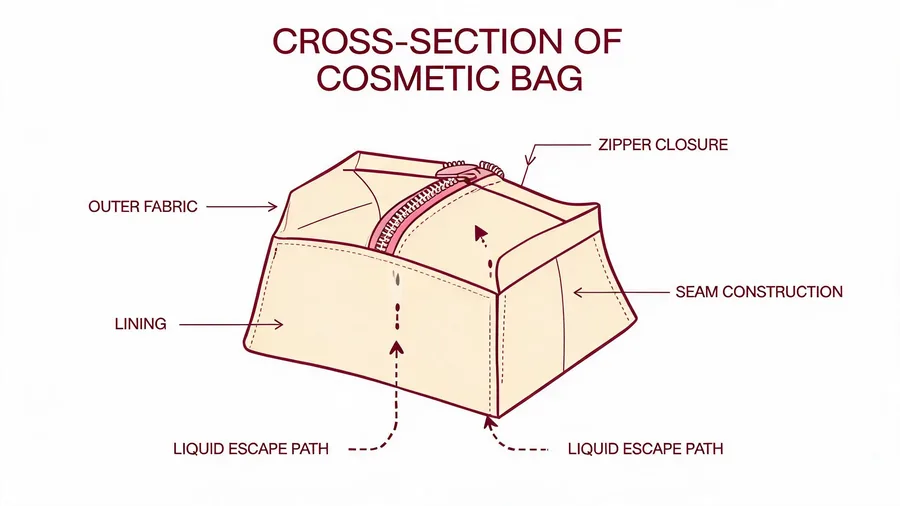
The closure matters too. A zipper is not a seal. It's a gap with teeth. A bag with a welded TPU lining and a standard zipper will still leak if turned upside down. A roll-top closure or a flap over the zipper changes that. The lining, seam, and closure have to be specified as one system. Not three separate choices.
Leak-resistant means the bag delays liquid escape. It's not guaranteed to stay dry under pressure. Leakproof means the bag was designed and tested to prevent liquid passage under stated conditions. Those conditions belong in the spec. A buyer who wants a leakproof claim has to define the test: how much liquid, how long, what position. Without that, the claim means nothing.
When a removable insert beats a sealed bag
A fully sealed bag costs more and feels stiff. Sometimes the better answer is a simple fabric bag with a removable waterproof insert. The insert isolates spills. It comes out for cleaning. It can be replaced. The outer bag stays soft and cheap.
This works well for brush bags, travel kits, and mixed-use pouches. The user puts liquids in the insert and powders in the main body. If the insert gets stained, it's a small part to replace, not the whole product. Buyers who sell replacement inserts get a repeat purchase too. That's a product line decision, not just a material decision.
Imagine a buyer who sells a canvas makeup bag. The brand look is natural cotton. A TPU lining would kill the feel. A removable TPU insert keeps the canvas exterior and adds spill control. Best of both, for a few cents more.
What a drainage eyelet is for
A drainage eyelet is a reinforced hole in the bottom or side of a washable compartment. It lets water out. It's used in wet bags, brush holders, and bags that get rinsed. The eyelet has to be reinforced because a plain hole tears under load. A metal or plastic ring spreads the stress.
Drainage eyelets don't belong on every cosmetic bag. They only make sense when the bag is designed to be washed or to hold wet items. A standard makeup pouch with an eyelet just leaks powder. A brush bag that gets rinsed after use benefits. Specify the eyelet only when water entry is expected.
Lining to product positioning table
| Product position | Recommended lining | Why |
|---|---|---|
| Everyday makeup pouch | Coated polyester or nylon | Wipes clean, low cost, sews fast |
| Premium gift set | Velvet or jacquard | Luxury feel, hides light stains, photographs well |
| Wet toiletry bag | Welded TPU | True liquid barrier, flexible, durable |
| Eco-focused line | rPET with coating | Recycled story without losing cleanability |
| Dry brush roll | Organic cotton or canvas | Soft, natural, no liquid contact expected |
| Mixed wet and dry | Removable TPU insert | Isolates spills, keeps outer shell soft |
This table is a starting point. The final call depends on the shell fabric, the closure, the price target, and the testing the buyer needs. A lining that works in one construction can fail in another.
Specifying a lining without getting burned
Put the lining in the spec sheet. Name the fiber, the weight, the coating, and the seam treatment. Don't write "waterproof lining" and stop. Write "300T polyester with PU coating, welded seams." That tells the factory what to make and what to test.
Ask for a pre-production sample. Spill something on it. Wipe it. Check the seams. A buyer who skips this step is buying a description, not a product. The sample is the contract. The spec sheet is the map.
Lining cost varies widely. A basic polyester lining adds little. Welded TPU adds real cost and changes the sewing process. Velvet adds perceived value but limits the use case. Decide what the product must survive, then pick the lining that survives it. Don't start with the material and hope the use case follows.
If you're comparing factories, look at how they talk about linings. A factory that asks about your liquids, your cleaning expectations, and your seam requirements knows the product. One that just quotes the cheapest lining doesn't. That conversation tells you more than a spec sheet ever will.
We've covered lining selection in depth here. For more on specific constructions, see our guides on mesh cosmetic bags and custom cosmetic pouches. If you're evaluating suppliers, our manufacturer comparison walks through what separates a real bag factory from a trading company.
Frequently Asked Questions
What is the best lining for a waterproof cosmetic bag?
Welded TPU film is the strongest option. The film itself blocks liquid, and welded seams prevent leaks through needle holes. PVC works too but is stiffer and can crack over time. Specify the test conditions if you need a leakproof claim.
Can I get a custom logo woven into the lining?
Yes. Jacquard lining can carry a logo, monogram, or repeat pattern woven into the fabric. It looks premium and hides light staining. Minimum order quantities vary by design and factory, so ask for the current MOQ before committing.
Why does my cosmetic bag lining stain even though it's polyester?
Uncoated polyester absorbs oily residue slowly and holds stains. A PU or PVC coating makes the surface wipe-clean. If the lining is coated but still stains, check the seams. Liquid can pass through stitched seams and stain the shell from behind.
Is a removable insert worth the extra cost?
It depends on the product. A removable waterproof insert isolates spills, simplifies cleaning, and can be sold as a replacement part. For a soft-shell bag that holds liquids, it's often cheaper than fully sealing the whole bag. For a wet-use bag, a welded lining is simpler.