Cosmetic Bag Zipper Guide: Closures Worth Specifying
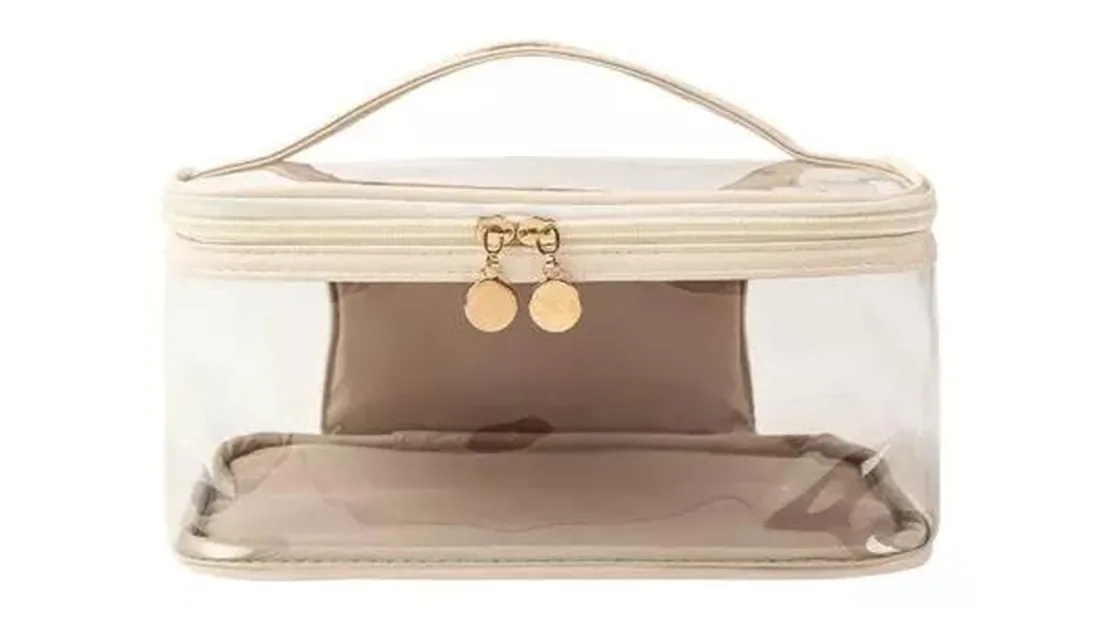
A cosmetic bag zipper is not a single decision. It is a system of chain, tape, sliders, pullers and end stops. Each part changes how the bag opens, how it seals and how it holds up in a buyer's bathroom. You can spec a beautiful bag and still get returns if the zipper binds at the end or the puller snaps off in week two.
This guide covers the closures that matter for cosmetic and toiletry products. We will walk through slider counts, water-resistant wording, dual-track systems, teeth materials, puller branding, tape colours and the hardware that comes off. Then we look at why zippers fail at the ends and what tests apply.
Single versus double sliders
A single slider opens the bag from one end. You pull it across the top and the teeth separate behind it. That is enough for a small pouch that sits flat on a counter.
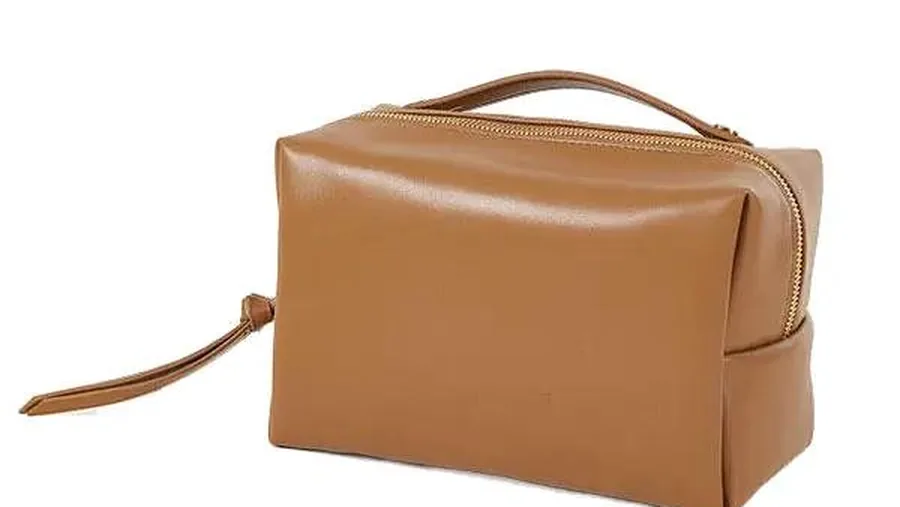
Double sliders change the opening. Two sliders meet in the middle or sit at opposite ends. The user can open either side. For a wide cosmetic bag, this means reaching a brush at the left end without unzipping the whole top. For a hanging toiletry kit, double sliders let the bag open from both ends while the middle stays closed.
Double sliders cost more. The chain runs the same length, but you add a second slider and often a wider opening geometry. Buyers ask us when the extra cost is worth it. The answer comes down to bag length and how the user accesses contents. A 20 cm pouch rarely needs two sliders. A 35 cm hanging organizer often does.
One failure we see on cheap double-slider bags is slider clash. The two sliders meet and jam because the chain was not sized for the meeting point. A good factory sets the slider stops so the two bodies cannot collide under normal use.
What water-resistant zippers actually promise
Water-resistant zipper is a loose term. It does not mean waterproof. A water-resistant zipper has a coated tape or a polyurethane film that slows water entry. It helps when a lotion bottle leaks inside the bag, but it will not survive a full dunk.
The wording matters in your spec. If you write "waterproof zipper" on the purchase order, the factory must ask what test condition you mean. There is no universal waterproof zipper. There are zippers that pass a stated water column test for a stated time. The exact value belongs in the approved specification.
For most cosmetic bags, a water-resistant zipper plus a wipe-clean liner is the practical combination. The zipper slows splash and seepage. The liner handles the residue. A leak-resistant construction delays liquid escape but is not guaranteed liquid-tight under pressure or prolonged exposure. A leakproof construction is designed and tested to prevent liquid passage under stated test conditions. You choose which claim your product can support.
Coil zippers with a polyurethane film are common here. The film sits on the tape and bridges the gap between the teeth. It works best on straight runs. Curved openings can lift the film and create a leak path.
Expandable dual-track systems
Some cosmetic bags use a dual-track zipper system. One track opens the main compartment. The other track expands a gusset or adds a second layer of storage. This is not two zippers doing the same job. It is two separate chain runs with different functions.
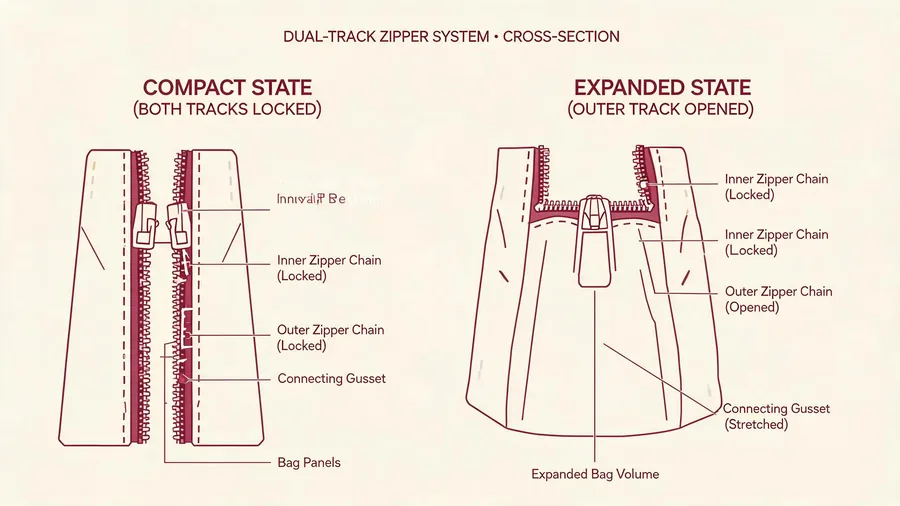
A common version is the expandable base. The main zipper opens the top. The expansion zipper runs around the lower body. When it opens, the base drops and the bag gains depth. The user can pack tall bottles standing up, then close the expansion zipper to compress the bag for travel.
Dual-track systems add cost and assembly time. Each track needs its own slider, stops and alignment. The two tracks must not interfere when both are open. If the expansion zipper catches the main chain, the bag feels broken even when nothing snapped. We spec a divider fabric between the tracks on anything wider than a small pouch.
This system suits travel kits and professional makeup cases. A flat pouch does not need it. A bag that must hold a full-size cleanser bottle often does.
Teeth materials and finishes
Cosmetic bag zippers mostly use coil chain or molded tooth chain. Metal chain exists but is rare on soft cosmetic bags because it adds weight and can scratch other items.
Coil chain is a spiral of nylon or polyester monofilament wound around a cord and sewn to the tape. It is light, flexible and quiet. It handles curved openings well. The downside is that a damaged coil can separate from the tape and the whole run fails.
Molded tooth chain has individual teeth injected onto the tape. It looks more structured and can carry a heavier load. It is louder than coil and less flexible on tight curves.
Finish matters more than material for cosmetics. A matte finish hides fingerprints from lotion and powder. A gloss finish reads as more premium but shows residue faster. Antique brass and gunmetal finishes are common on molded teeth. Coil chain takes colour in the monofilament itself, so the colour runs through the material.
Buyers sometimes ask for a metal zipper on a luxury cosmetic pouch. It photographs well. It also adds cost and can mark leather or coated fabrics if the teeth are not deburred. We have seen returns where a sharp metal tooth scratched a phone screen in the same bag.
Custom pullers and branding options
The puller is the cheapest branding surface on a cosmetic bag. It is small, but it sits exactly where the user's fingers land. That makes it high-value real estate.
You can spec a molded puller with your logo, a debossed metal puller, a rubber-coated puller or a simple cord puller with a printed heat-shrink tube. Each has a different cost and minimum order. The exact numbers depend on the factory and the process, so ask for the current matrix.
A custom puller changes the feel of the bag. A heavy metal puller makes a budget pouch feel more expensive. A soft rubber puller reads as comfort. A thin cord puller reads as lightweight and travel-friendly.
One caution. A custom puller must survive the same pull force as the zipper itself. If the puller breaks before the chain fails, the user blames the zipper. We test puller attachment with a simple pull test and set the acceptance value in the spec.
Tape colour choices
The zipper tape is the textile strip that carries the chain. It is usually polyester. It can be dyed to match the bag, contrast with it, or disappear into a dark lining.
Tone-on-tone tape looks clean. A matching tape makes the zipper recede and the bag silhouette stay simple. A contrast tape turns the zipper into a design line. A white tape on a black bag is a deliberate accent. It also shows dirt faster.
Colour matching is not free. The tape is dyed in a separate process from the bag fabric. A close match requires a Pantone reference and a lab dip. A near match is cheaper and often invisible on a busy print. A dead match on a solid colour bag takes more rounds.
We advise buyers to think about the lining colour, not just the shell. The tape sits against the lining on the inside. A white tape on a black lining looks like a mistake unless you meant it.
Detachable and adjustable hardware
Some cosmetic bags use detachable hardware. A wristlet strap with a swivel hook, a shoulder strap with a D-ring, or a hanging hook that clips on. The hardware is not the zipper, but it shares the same stress points.
A swivel hook lets a strap rotate without twisting the webbing. A D-ring gives a fixed attachment point. A hanging hook needs reinforcement because the complete load is concentrated at one attachment point. If the hook pulls out, the bag is useless even though the zipper is fine.
Adjustable hardware uses a ladder lock or a tri-glide. A ladder lock changes strap length and holds the selected position under tension. A tri-glide is a three-slot webbing adjuster used for length adjustment or strap retention. Both are simple parts. Both fail when the webbing is too thin for the slot and slips under load.
These parts are usually spec'd separately from the zipper. But they share the same quality bar. A bag with a great zipper and a cheap swivel hook still feels cheap.
Why zippers fail at the ends
The zipper end is where most failures happen. Not the middle. The end takes the highest stress because the slider stops there and the user pulls harder to finish the opening or closing.
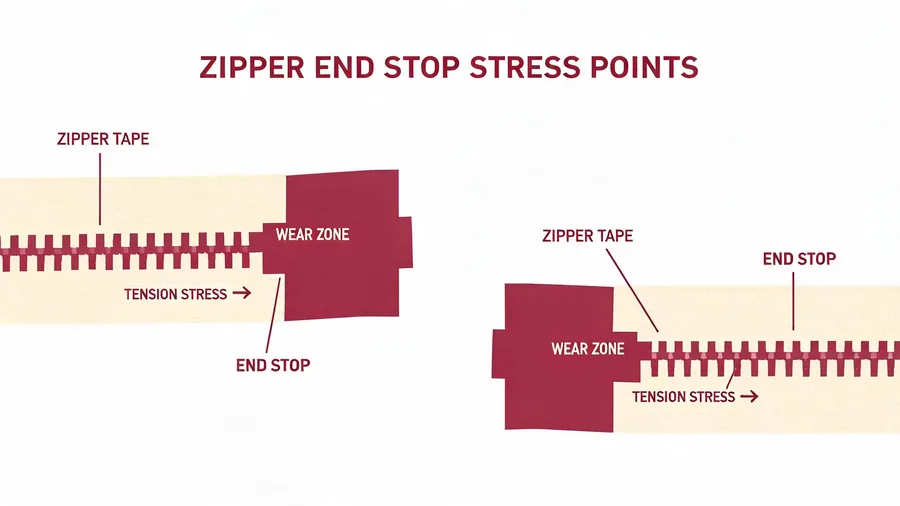
Two things protect the end. The top stop and the bottom stop. They prevent the slider from running off the chain. If a stop is weak, the slider flies off and the user cannot re-thread it without tools.
The bar tack is the second line of defense. It is a dense zigzag stitch that anchors the tape to the bag at the zipper end. It sits right at the stress point. Without a bar tack, the tape can tear away from the fabric and the zipper separates from the bag.
We see this on cheap bags where the bar tack is too short or placed too far from the chain end. The tape pulls, the stitch line pops, and the zipper peels open. A good bar tack is placed close to the chain end and sewn through all layers, not just the top fabric.
On a double-slider bag, the meeting point in the middle is the second failure zone. The sliders meet and the user pulls one against the other. A center stop or a reinforced tape section prevents the sliders from passing each other and jamming.
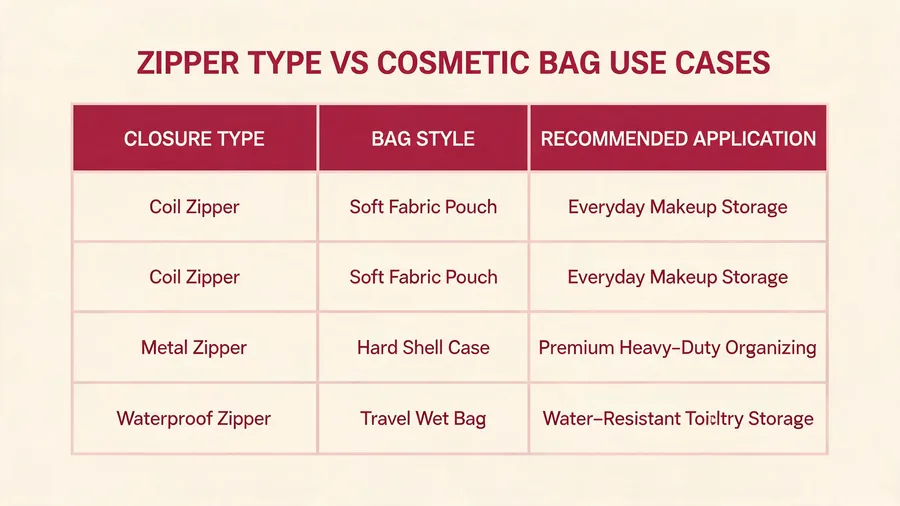
Closure-to-use table
| Use case | Recommended closure | Why |
|---|---|---|
| Small flat pouch | Single coil zipper, matte finish | Light, quiet, cheap, enough for a 20 cm opening |
| Hanging toiletry kit | Double sliders, wide opening | Access from both ends while hanging |
| Travel kit with bottles | Water-resistant coil zipper plus wipe-clean liner | Slows leaks, liner handles residue |
| Professional makeup case | Dual-track expansion zipper | Expands for tall bottles, compresses for transport |
| Luxury pouch | Molded tooth zipper, custom metal puller | Structured look, premium feel at the touch point |
| Gym or wet-use bag | Coil zipper with PU film, heat-welded seams | Better leak control, no stitched seam to wick |
Tests that apply
Zipper testing is not one test. It is a set of checks that match the failure modes above. The exact values belong in your approved specification, but the test categories are standard.
Pull force tests measure how much force the slider needs to move and how much force the chain can take before the teeth separate. A zipper that is too stiff feels bad. A zipper that separates too easily fails in use.
Endurance tests cycle the zipper open and closed. The number of cycles is set by the spec and depends on the product's expected life. A daily-use cosmetic bag needs more cycles than a gift-with-purchase pouch.
Puller attachment tests apply force to the puller. The puller must stay attached and the slider must not deform.
Water-resistance tests apply a water column to the closed zipper for a stated time. The result is pass or fail against the agreed pressure. This is where "water-resistant" and "leakproof" get defined.
Colourfastness tests check the tape and the monofilament. A zipper that bleeds dye onto a white lining is a return.
You do not need to run every test on every bag. A flat pouch needs pull force and endurance. A travel kit with a water-resistant claim needs the water column test too. Match the test plan to the claim.
Specifying the zipper without overpaying
Most buyers over-spec the zipper and under-spec the ends. They ask for a branded metal zipper on a bag that will sit in a drawer. Then the bar tack is weak and the zipper peels off in month three.
Start with the use case. A flat pouch needs a simple coil zipper with a good end stop and a proper bar tack. A travel kit needs water resistance and maybe double sliders. A luxury pouch needs a custom puller and a molded tooth chain.
Write the spec in that order. Chain first, then sliders, then tape colour, then puller, then end reinforcement. That is the order in which each choice affects the user's hand.
If you are sourcing cosmetic bags and want a factory that asks these questions before you do, look at our custom cosmetic pouch options. We also run mesh cosmetic bags where the zipper sits against a see-through panel. For a full look at how we build toiletry products, see the cosmetic bag manufacturer overview.
FAQ
What is the difference between a water-resistant and a waterproof cosmetic bag zipper?
A water-resistant zipper slows water entry with a coated tape or film. A waterproof zipper is tested to prevent liquid passage under stated test conditions. The exact pressure and time belong in the spec. Most cosmetic bags need water-resistant, not waterproof.
Do I need double sliders on a cosmetic bag?
Only if the bag is wide or hangs. Double sliders let the user open either end without unzipping the whole top. A 20 cm pouch rarely needs them. A 35 cm hanging toiletry kit often does.
Can I put my logo on the zipper puller?
Yes. Molded, debossed, rubber-coated and cord pullers all take branding. Each has a different cost and minimum order. Ask the factory for the current matrix before you commit to a design.
Why does my zipper keep separating at the end?
Usually a weak end stop or a bar tack placed too far from the chain end. The end takes the highest stress. A proper bar tack sits close to the chain end and sews through all layers.
Frequently Asked Questions
What is the difference between a water-resistant and a waterproof cosmetic bag zipper?
A water-resistant zipper slows water entry with a coated tape or film. A waterproof zipper is tested to prevent liquid passage under stated test conditions. The exact pressure and time belong in the spec. Most cosmetic bags need water-resistant, not waterproof.
Do I need double sliders on a cosmetic bag?
Only if the bag is wide or hangs. Double sliders let the user open either end without unzipping the whole top. A 20 cm pouch rarely needs them. A 35 cm hanging toiletry kit often does.
Can I put my logo on the zipper puller?
Yes. Molded, debossed, rubber-coated and cord pullers all take branding. Each has a different cost and minimum order. Ask the factory for the current matrix before you commit to a design.
Why does my zipper keep separating at the end?
Usually a weak end stop or a bar tack placed too far from the chain end. The end takes the highest stress. A proper bar tack sits close to the chain end and sews through all layers.